Published byDr. Rosa Ma. Montezuma : March 11, 2026.
Yes, cavities can be indirectly related to stomach discomfort, especially when they affect chewing, promote infection, bad breath, inflammation or sustained poor oral hygiene. But it does not mean that every cavity alone causes gastritis or a digestive problem. The important thing is to understand when oral health can influence your digestion and when you need a dental assessment. If you have pain when chewing, sensitivity or a visible cavity, a timely assessment can prevent the problem from progressing. At dental treatments you can review what options are available depending on the condition of the tooth and your gums.
Can tooth decay really cause stomach problems?
Cavities are not usually a direct and sole cause of stomach problems, but they can contribute to them indirectly.
When a cavity progresses, it can cause pain when chewing, infection, intense sensitivity and changes in the way you eat. That can cause you to chew worse, swallow food in larger chunks, avoid certain foods or maintain constant oral inflammation. All of these can impact your digestion and overall well-being.
The important relationship is not “caries equals stomach disease”, but this:
sick mouth
poor chewing
more bacteria and more inflammation
worst digestive process
more discomfort and risk of complications
If in addition to a cavity there is discomfort when eating, bad breath or persistent sensitivity, a timely check-up as part of dental treatment can help detect what is happening before the problem progresses.
How can a cavity affect the digestive system?
1. Because digestion begins in the mouth.
Digestion does not start in the stomach. It starts when you chew. If you have pain from a cavity, it is common for you to chew less, faster or only on one side. This can make it difficult to properly grind food and make the digestive process more cumbersome.
2. Because a dental infection changes the environment of the mouth.
Caries is a process caused by bacteria and acids that damage the enamel. If it progresses, it can reach deeper tissues, cause infection and form abscesses. A persistently infected mouth is not a healthy environment to initiate digestion.
3. Because pain changes your diet
Many people with deep caries stop eating fruits, hard foods, hot or cold foods, or simply eat worse. Such a change in diet can also have an impact on the stomach, on the quality of digestion and on the oral-digestive microbiota.
4. Because poor oral health often coexists with other risky habits.
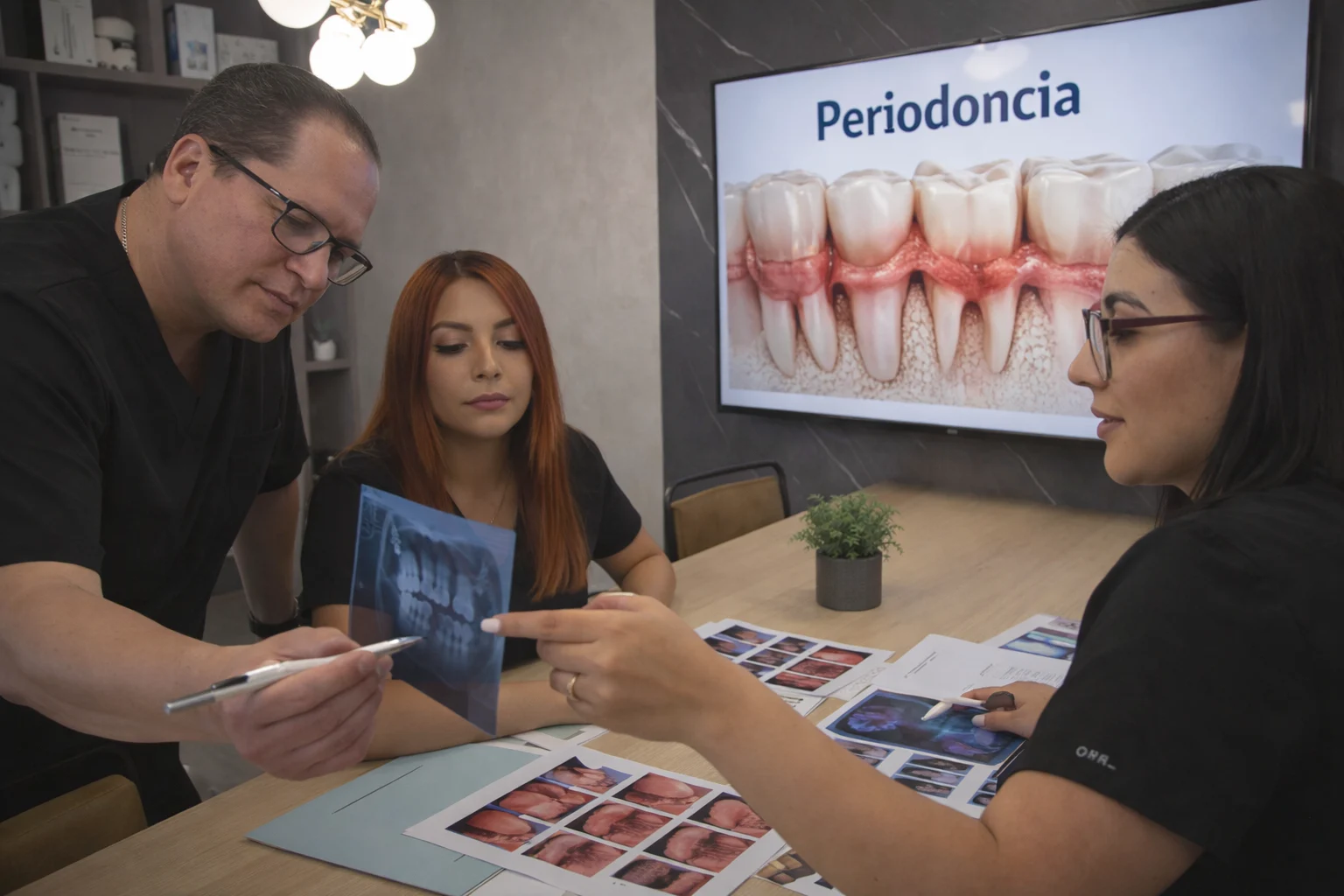
Tooth decay does not always appear alone. Sometimes there is also plaque, tartar, inflamed gums, bleeding or persistent bad breath. When that happens, it is advisable to check not only the tooth, but also the health of the gums from the periodontics area.
What symptoms may suggest that your dental problem is already affecting your overall well-being?
You should pay attention if, in addition to dental discomfort, you present:
pain when chewing
strong sensitivity to cold, heat or sweetness
persistent bad breath
gum inflammation
feeling of infection or bad taste in the mouth
difficulty in eating well
toothache accompanied by facial swelling or fever
When a cavity progresses and infection or significant inflammation appears, it is no longer a minor problem. In many patients, the problem is not just a tooth, but a broader oral condition. If in addition to the tooth there is bleeding or inflamed gums, it makes sense to also assess the periodontal part.
Can a cavity cause gastritis?
There is no solid basis for stating that a cavity alone causes gastritis in all cases.
It is accurate to say that poor oral health can indirectly contribute to digestive discomfort or worsen habits that affect the gastrointestinal system. If a person has pain, chews poorly, eats worse, sleeps poorly or lives with inflammation and dental infection, it can impact their overall well-being. But gastritis has multiple causes and requires medical evaluation when there are persistent digestive symptoms.
What type of caries is most likely to cause complications?
Those of most concern are:
deep cavities
caries near the nerve
caries with biting pain
caries with infection or abscess
caries in patients who already have inflamed gums or persistently poor hygiene
The deeper and longer it goes untreated, the greater the risk of pain, infection, tooth loss and functional impairment.
How do you know if your problem is just a cavity or something else?
Not all dental pain is caries, and not all digestive discomfort comes from the mouth. That is why a complete clinical evaluation is advisable.
At La Clínica Dental, the strongest focus according to the report should be supported by:
digital diagnosis,
integrated care,
clinical safety,
clear explanations,
and trust.
That positioning fits perfectly with this topic, because the patient doesn’t just need to “have a tooth capped.” He needs to understand if there is:
caries,
infection,
swollen gums,
wear and tear,
bad bite,
defective restorations,
or a broader oral health problem.
Some people do not have a single isolated problem, but a combination of caries, gum inflammation, old restorations, wear, bad bite or infection. In those cases a comprehensive dental treatment approach is appropriate to define a complete plan and not just a temporary solution.
When to go to the dentist if you suspect that a cavity is already affecting you beyond the mouth?
You should go as soon as possible if you have:
frequent toothache
difficulty chewing
persistent sensitivity
inflammation of the gums or face
constant bad odor
fever
unpleasant taste in the mouth
bleeding
a visible cavity
years without dental checkup
Timely examination can prevent a small cavity from ending up in endodontics, extraction or a more serious infection.
What treatments help when a cavity is already advanced?
Depends on the case. May be required:
professional cleaning,
resin,
inlay,
endodontics,
periodontal treatment if gums are also affected,
or even extraction and rehabilitation if the tooth can no longer be preserved.
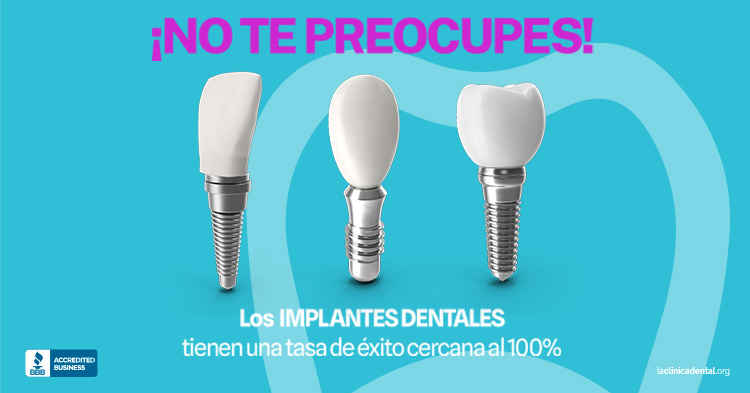
When the damage is already advanced and the tooth cannot be preserved, it may be necessary to plan its replacement. In such cases, an implantology assessment helps to understand what options exist to restore function and stability.
How to prevent tooth decay from affecting your diet and quality of life
Actual prevention includes:
correct brushing with fluoride toothpaste
cleaning between teeth
less frequent sugars
periodic revisions
early attention to tenderness or pain
gum treatment if there is inflammation
cleanings and controls according to your individual risk
WHO and other health sources agree that caries is a common, preventable disease associated with pain, difficulty eating and tooth loss when left untreated.
| Situation | What can happen | What to do |
|---|---|---|
| Small caries without pain | May progress without clear symptoms | Early assessment and treatment |
| Caries with pain when chewing | Poor chewing and discomfort when eating | Dental consultation as soon as possible |
| Deep caries | Increased risk of infection, abscess or pulp damage | Complete diagnosis and treatment plan |
| Cavities + inflamed gums | More bacteria, bad odor and worse overall oral health. | Comprehensive caries and periodontal evaluation |
| Years without dental check-up | Accumulated problems and more complex treatment | Complete check-up with studies if required |
If you want to continue learning about prevention, gums, implants and long-term oral care, you can explore more content on The Dental Clinic blog.
Frequently asked questions about caries and stomach problems
Can tooth decay cause stomach problems?
They can be indirectly related to stomach discomfort, but are not always the direct cause. The connection usually appears when tooth decay affects chewing, promotes infection, causes a bad taste in the mouth, alters eating or is accompanied by persistent oral inflammation. The key is not to alarm, but to understand that poor oral health can influence how you eat and how you feel.
Can a cavity cause gastritis?
This should not be stated absolutely. Gastritis can have many causes and cannot be explained only by a dental problem. It is correct to say that an advanced caries can indirectly contribute to digestive discomfort if it generates pain, infection, poor chewing or important changes in the diet.
Why would a cavity affect my digestion?
Because digestion begins in the mouth. If a tooth hurts, many people chew less, faster or only on one side. This causes food to reach the stomach more poorly ground and can make the digestive process more uncomfortable. In addition, a mouth with constant infection or inflammation does not provide a healthy environment to initiate digestion.
What is the relationship between the mouth and the stomach?
The mouth is the entrance to the digestive system. Everything that happens in it – chewing, saliva, bacteria, inflammation, pain or infection – can influence the early stages of the digestive process. That’s why oral health should not be viewed in isolation from the rest of the body.
Is a deep cavity more likely to affect my overall well-being?
Yes, the deeper and longer it goes untreated, the greater the risk of pain, infection, abscess, difficulty eating and deterioration of quality of life. A small cavity may go unnoticed, but an advanced cavity can alter sleep, eating, concentration and pain tolerance.
What symptoms may suggest that a cavity is already advanced?
Pain when chewing, intense sensitivity to cold, heat or sweetness, visible cavity, persistent bad breath, gum inflammation, unpleasant taste in the mouth, spontaneous pain or discomfort that radiates. If there is also swelling or fever, it should be evaluated as soon as possible.
Can a cavity cause a bad taste in the mouth or nausea?
Yes, it can contribute. When there is bacterial buildup, retained debris, infection or abscess, some people notice a bad taste in their mouth, an unpleasant sensation when eating or even a rejection of certain foods. It does not always mean a stomach problem, but it is a sign that something is not right in the mouth.
Can bad breath due to tooth decay be related to infection?
Yes, persistent bad breath may be associated with tooth decay, inflamed gums, plaque build-up, retained food debris or dental infection. When it does not improve with normal hygiene, a clinical evaluation is advisable.
What if I chew on only one side because of a cavity?
Chewing only on one side can make grinding food less efficient and also overload teeth, muscles and jaw joint on the opposite side. If this continues, it can worsen your eating comfort and affect your overall oral health.
Can tooth decay make me eat worse or change my diet?
Yes. It is very common for a person with deep caries to avoid hard, cold, hot or sweet foods. They may also eat more slowly, choose soft foods or reduce their variety of foods. Such sustained change can affect diet quality and digestive well-being.
Can a cavity cause infection?
Yes, if not treated in time, decay can advance into deeper layers of the tooth and affect the pulp, which can lead to infection, severe pain or abscess. When infection is present, it is no longer a simple “speck” or “dimple”, but a problem that requires professional attention.
What is the difference between a simple cavity and a deep cavity?
Simple caries usually affects more superficial layers and sometimes resolves with conservative treatments. Deep caries is closer to the nerve or has already compromised it, so it can cause severe pain and require more complex procedures, such as endodontics or even extraction if the damage is severe.
How do I know if my pain is due to tooth decay or another dental problem?
Not all dental pain is caries. It can also be due to fissures, wear, inflamed gums, periodontal infection, bruxism or defective restorations. That is why the assessment should not be based on symptoms alone: a clinical examination and, in some cases, imaging studies are necessary.
Can a cavity also affect the gums?
Yes, especially if there is poor hygiene, plaque and tartar buildup or if the problem has been untreated for a long time. Although caries and gum disease are not the same thing, they often appear together and worsen the overall condition of the mouth.
What if I have had an untreated cavity for a long time?
The problem can progress without pain at first. Over time, it can destroy more tooth structure, increase the risk of infection, make treatment more costly and compromise the possibility of saving the tooth. The more time that passes, the less conservative the management tends to be.
Can a cavity cause stomach pain directly?
Not in all cases and not automatically. More accurately, it can indirectly contribute to discomfort if it makes chewing difficult, changes your diet, causes infection or worsens overall oral health. If there are persistent digestive symptoms, the corresponding medical cause should also be assessed.
What treatments may be needed if a cavity is already advanced?
It depends on the case. A resin may be enough if the damage is limited, but in other cases inlay, crown, endodontics or extraction is required. If there is also gum inflammation or infection, treatment may be comprehensive and not limited to “capping” a tooth.
When should I see a dentist if I suspect that a cavity is affecting my eating?
You should go if you have pain when chewing, persistent sensitivity, bad breath, visible cavity, inflammation, bad taste in your mouth or difficulty eating normally. Also if you have been postponing your check-up for a long time or if the discomfort is already interfering with your daily activities.
What studies help to assess deep caries?
Clinical examination is essential, but it is often complemented with radiographs to know how deep the lesion is, if the nerve is compromised or if there is already infection. This makes it possible to decide if the tooth can be restored or if it requires a more complex treatment.
Can cavities be prevented before they affect my diet?
Yes, prevention includes proper brushing, hygiene between teeth, control of frequent sugar consumption, regular dental checkups and early attention to sensitivity or pain. The goal is not only to avoid a cavity, but to prevent the problem from progressing to affect your eating comfort and overall health.
What are the signs that I should no longer wait?
Constant pain, swelling, fever, severe tenderness, difficulty chewing, persistent bad taste, pus or a large visible cavity. When these signs appear, delaying consultation only increases the likelihood of more complex treatment.
Is the best solution to take painkillers while it wears off?
No. Pain relievers may reduce discomfort for a few hours, but they do not eliminate the decay or infection. If the pain returns or increases, the problem is still active and needs dental treatment.
Can tooth decay affect my quality of life even if I don't have pain all the time?
Yes. It can alter the way you eat, make you insecure, cause bad breath, cause occasional tenderness and go on silently. Waiting until it hurts too much is not a good strategy.
Which specialist should assess this problem?
A dentist who can check for cavities, gums, bite, signs of infection and the general condition of your mouth. The ideal is a comprehensive assessment to understand not only which tooth is affected, but what impact it is having on your oral health and function.
Do you have dental pain or discomfort when eating? Schedule an evaluation
An untreated cavity can affect the way you chew, your comfort when eating and your overall oral health. At La Clínica Dental we review your case to detect cavities, infection, inflammation or advanced damage and define the most appropriate treatment.
Author:
Dr. Rosa María Moctezuma Lozano
National Autonomous University of Mexico
ID No. 1135288
Clinically reviewed and updated content for patient information guidance.
Last editorial revision: March 11, 2026.