
Call us!
Ícono de correo electrónico en fondo amarillo, representando la opción de contacto en La Clínica Dental para agendar citas y consultas. Ícono de Facebook, red social, utilizado para conectar con La Clínica Dental y compartir información sobre tratamientos dentales y servicios. Icono de WhatsApp, utilizado para contacto y consultas en La Clínica Dental, servicios de odontología y tratamientos dentales. Icono de Pinterest, utilizado para compartir contenido sobre turismo dental y tratamientos en La Clínica Dental. Icono de X en fondo negro, representando la marca de La Clínica Dental, relacionado con servicios de odontología y turismo dental. Icono de Instagram, representando la presencia en redes sociales de La Clínica Dental y su enfoque en la odontología moderna y servicios de turismo dental. Ícono de TikTok, relacionado con la promoción de servicios de La Clínica Dental y su presencia en redes sociales. Icono de YouTube, enlace a contenido sobre tratamientos dentales y servicios de La Clínica Dental.

Dental Implants

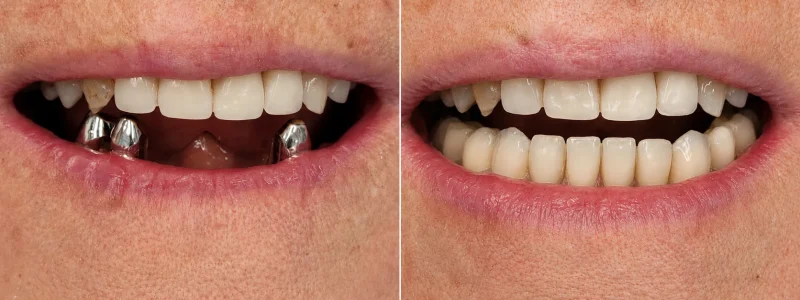
At La Clinica Dental CDMX, dental implant treatments are planned using 3D digital diagnosis, CBCT tomography and computer guided surgery to rehabilitate from a single tooth to complex cases of total tooth loss with All-on-4 protocols and complete oral rehabilitation.

At La Clínica Dental (CDMX) we have specialists in dental implants with the latest world standards who evaluate your case individually, analyze the quantity and quality of bone and design a customized plan to replace missing teeth with titanium implants that integrate with the bone and support crowns, bridges or prostheses. The procedures are performed by a specialized team -including Maxillofacial Surgery-under strict biosafety standards, looking for long-lasting, safe results and with a chewing sensation very close to that of a natural tooth.

In addition, we offer dental tourism services in CDMX, facilitating the planning of times and visits for patients traveling from abroad. Schedule your consultation to learn about your options and receive your personalized treatment plan.

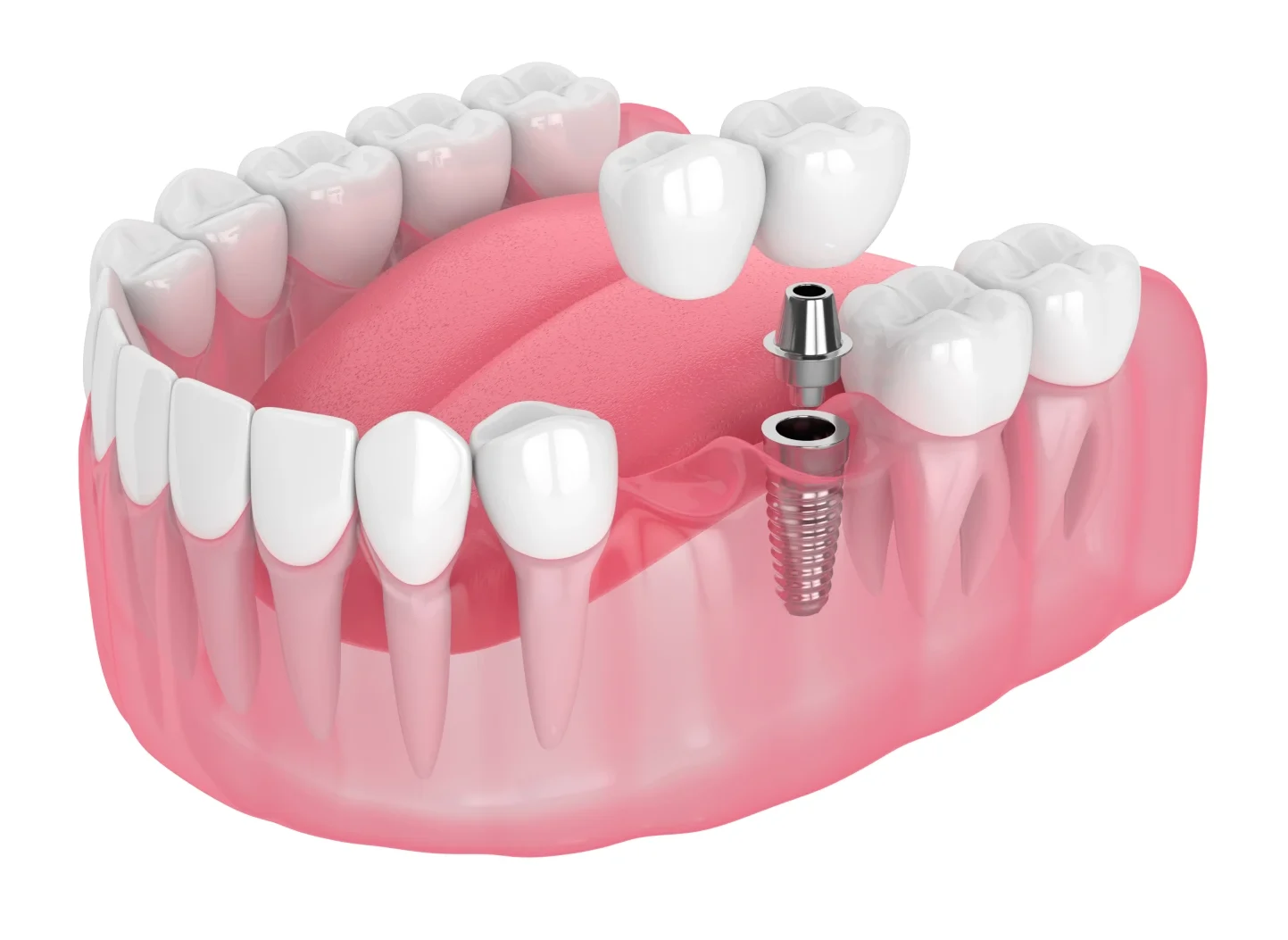
Modelo de mandíbula con implante dental, mostrando el tornillo de titanio integrado al hueso, el pilar y la corona, ilustrando el sistema de tres partes de un implante dental unitario.

What is a Dental Implant?

Dental implants are titanium screws that are surgically placed in the jawbone, under the gum, in order to recover lost teeth, or to give additional support to removable prostheses.

At La Clínica Dental we have the best specialists in Dental Implants and Maxillofacial Surgery, to perform any implant surgery, with the highest standards of biosafety and the best materials.

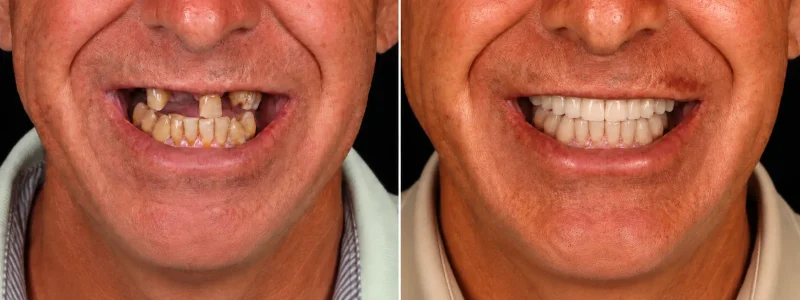
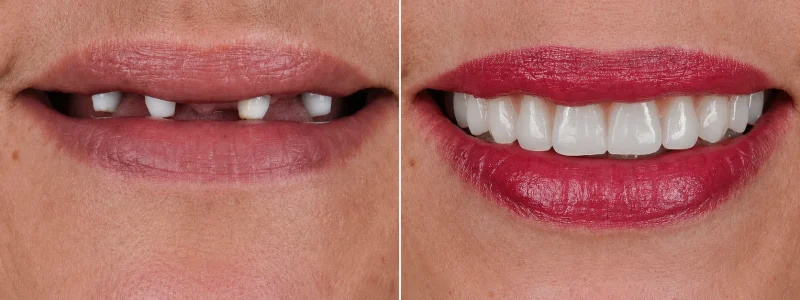
With the help of dental implants we can support: dental prostheses, crowns, bridges, over dentures, facial prostheses or even orthodontic anchorages.

Comparison:

Options Advantages Considerations
Removable prosthesis Lower initial investment Less stability and comfort
All-on-4 implants Greater functional stability Requires digital diagnosis and surgery
Single implants Individual preservation Depends on bone condition

Icon of a blue tooth symbol representing dental health and endodontic treatments at La Clínica Dental.
Longer life
Rates above 90% in periods of 20-30 years.
Icon of a blue tooth symbol representing dental health and endodontic treatments at La Clínica Dental.
It is the safest option
The prosthesis is attached to the bone and not to other teeth.
Icon of a blue tooth symbol representing dental health and endodontic treatments at La Clínica Dental.
Maintenance
The maintenance of implants is similar to that required for other teeth.
Icon of a blue tooth symbol representing dental health and endodontic treatments at La Clínica Dental.
Naturalness
The chewing sensation is similar to that of a natural tooth.

Sign up for a consultation

Icono de implante dental, representando servicios de implantología en La Clínica Dental, enfocado en tratamientos dentales avanzados y estética dental.
Select the teeth in the image
Icono de implante dental, representando servicios de implantología en La Clínica Dental, enfocado en tratamientos dentales avanzados y estética bucal.
Sign up for a consultation
Icono de implante dental, representando servicios de implantología en La Clínica Dental, enfocado en tratamientos dentales avanzados y estética dental.
Obtain a treatment plan
Modelo gráfico de dientes superiores e inferiores, representando opciones de tratamiento dental en La Clínica Dental, enfocado en implantes dentales y estética bucal.
Icono de diente negro, representando servicios de odontología y tratamientos dentales en La Clínica Dental.
0
Icono de cierre negro, utilizado en la navegación de la página de La Clínica Dental, que ofrece servicios de odontología avanzada y tratamientos dentales.
Treatment options:
  • Icono de implante dental en color negro, representando servicios de implantología dental en La Clínica Dental. Not a single tooth extracted
Sign up for a consultation

Technology we use for the diagnosis and treatment of dental implants

The Dental Clinic stands out for its focus on digital dentistry and state-of-the-art technology, which allows for more accurate diagnoses and less invasive treatments.

Icon of a blue tooth symbol representing dental health and endodontic treatments at La Clínica Dental.
3D CBCT tomography
CBCT tomography allows to obtain highly accurate three-dimensional images to evaluate bone, anatomical structures and to plan dental implant treatments with greater safety and predictability.
Icon of a blue tooth symbol representing dental health and endodontic treatments at La Clínica Dental.
Digital Intraoral Scanner
The digital intraoral scanner replaces traditional impressions with accurate digital captures of the mouth, facilitating the planning of implants, prostheses and oral rehabilitation with greater patient comfort.
Icon of a blue tooth symbol representing dental health and endodontic treatments at La Clínica Dental.
3D Digital Diagnostics
Digital diagnostics integrates images, scans and clinical analysis to design customized implantology treatments, optimizing accuracy and reducing risks during oral rehabilitation.
Icon of a blue tooth symbol representing dental health and endodontic treatments at La Clínica Dental.
Computer Guided Surgery
Guided surgery allows the placement of dental implants through digital pre-planning and precision surgical guides, achieving more controlled, minimally invasive and predictable procedures.
Icon of a blue tooth symbol representing dental health and endodontic treatments at La Clínica Dental.
Digital Implant Planning
Digital planning helps determine the ideal position, angulation and distribution of implants prior to surgery, improving functional and esthetic stability.
Icon of a blue tooth symbol representing dental health and endodontic treatments at La Clínica Dental.
Digital Surgical Guides
Digital surgical guides are devices designed from 3D studies to assist in the precise placement of dental implants and optimize clinical outcomes.
Icon of a blue tooth symbol representing dental health and endodontic treatments at La Clínica Dental.
Digital Smile Design
The digital smile design allows to visualize in advance the esthetic and functional rehabilitation of the patient before starting the implant treatment.
Icon of a blue tooth symbol representing dental health and endodontic treatments at La Clínica Dental.
CAD/CAM Digital Flow
CAD/CAM technology facilitates the digital fabrication of crowns, prostheses and implant-supported restorations with high precision, fit and esthetics.
Icon of a blue tooth symbol representing dental health and endodontic treatments at La Clínica Dental.
Three-dimensional bone evaluation
Three-dimensional bone assessment allows the analysis of bone density, volume and quality to determine the feasibility and proper planning of dental implants.
Icon of a blue tooth symbol representing dental health and endodontic treatments at La Clínica Dental.
Digital Treatment Simulation
Digital simulation helps to visualize different clinical scenarios prior to the procedure, allowing for more personalized and predictable treatments.
Icon of a blue tooth symbol representing dental health and endodontic treatments at La Clínica Dental.
Minimally Invasive Implantology Protocols
Minimally invasive digital protocols aim to reduce surgical trauma, improve recovery and increase accuracy during dental implant placement.
Icon of a blue tooth symbol representing dental health and endodontic treatments at La Clínica Dental.
Digital Oral Rehabilitation
Digital oral rehabilitation integrates diagnosis, planning, surgery and restoration using advanced technology to restore function and esthetics in complex cases of tooth loss.

Dental implant prices: know a reference before your diagnosis

The price of dental implants may vary according to the clinical case of each patient. Factors such as the number of teeth to be replaced, the condition of the bone, the health of the gums, the type of prosthesis, the need for bone grafts or sinus lift can modify the final cost of the treatment.

The following table shows reference prices for dental implants and related procedures at La Clínica Dental. These values help you plan your treatment, but are not a substitute for a professional evaluation. To receive an accurate quotation, it is necessary to perform a dental diagnosis, review imaging studies and define which solution is the most appropriate for your health, function and esthetics.

Procedure Reference Price Price at The Dental Clinic Estimated duration
Large bone graft USD 2,000 USD 1,350 1 day
Small bone graft USD 1,500 USD 1,300 1 day
Implant supported removable overdenture, with 2 implants USD 6,900 USD 5,900 1 day for surgery; after 4 to 5 months, 5 to 10 days prosthetic procedure
Implant supported removable overdenture, with 4 implants USD 12,300 USD 8,800 1 day for surgery; after 4 to 5 months, 5 to 10 days prosthetic procedure
Implant supported removable overdenture, with 6 implants USD 17,700 USD 10,850 1 day for surgery; after 4 to 5 months, 5 to 10 days prosthetic procedure
Implant-supported removable overdenture, with 8 implants USD 23,000 USD 12,550 1 day for surgery; after 4 to 5 months, 5 to 10 days prosthetic procedure
Implant-supported full-arch porcelain bridge with 4 implants USD 24,000 USD 17,150 1 day for surgery; after 4 to 5 months, 5 to 10 days prosthetic procedure
Implant-supported full-arch porcelain bridge with 6 implants USD 28,000 USD 19,600 1 day for surgery; after 4 to 5 months, 5 to 10 days prosthetic procedure
Implant-supported full-arch porcelain bridge with 8 implants USD 32,000 USD 21,400 1 day for surgery; after 4 to 5 months, 5 to 10 days prosthetic procedure
Mini dental implant USD 1,100 USD 325 3 to 5 days
Maxillary sinus lift USD 4,000 USD 1,770 3 days
Titanium dental implant, including abutment and standard crown USD 3,900 2,200 USD 1 day for surgery; after 4 to 5 months, 5 to 10 day prosthetic procedure

Ready to get your smile back?

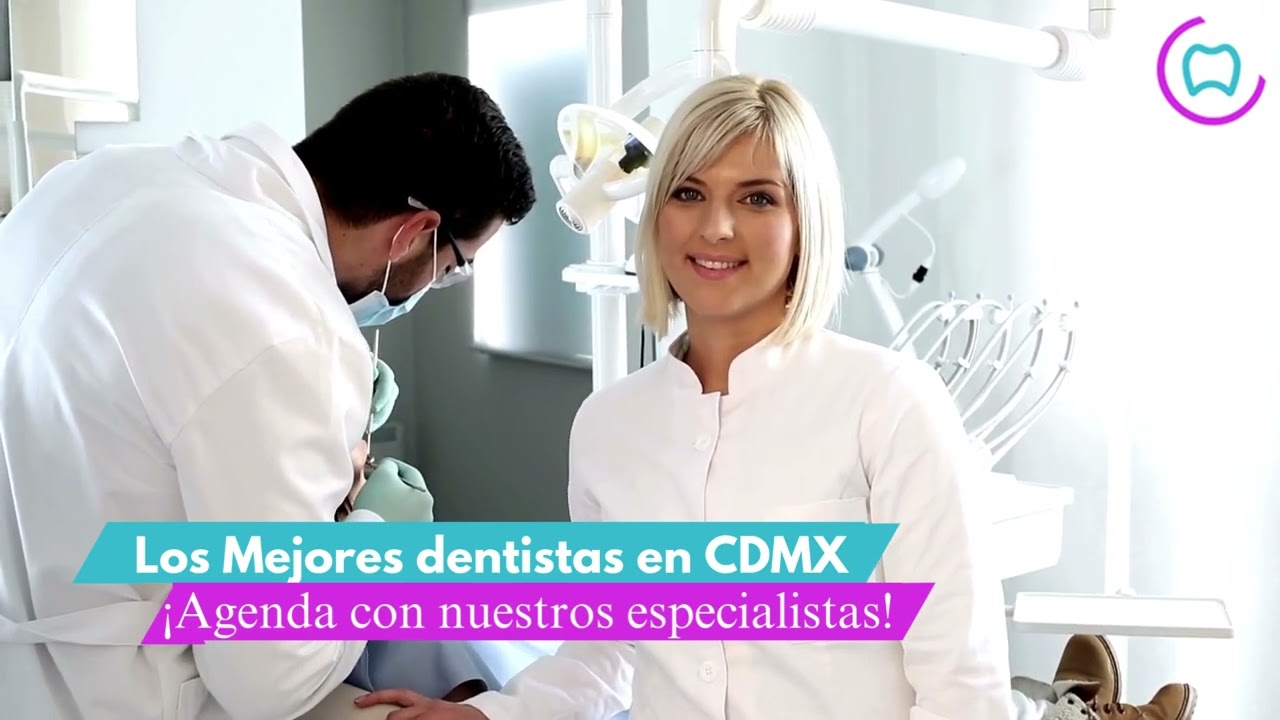
Imagen de un dentista sonriente en un entorno profesional, destacando la importancia de la salud dental y la atención personalizada en La Clínica Dental.
Mujer sonriente en clínica dental con dentista en acción, promoviendo servicios de implantología y atención especializada en La Clínica Dental.
Icono de reproducción en video, relacionado con servicios dentales y tratamientos en La Clínica Dental.

Frequently asked questions about dental implants

1) Am I a candidate for dental implants?

Most adult patients can be candidates, but the correct indication is defined with a clinical evaluation and studies. In that appointment we review the state of the gums, the quantity and quality of the bone, the bite (occlusion) and habits that influence the success of the implant.

For example, if you are not a candidate today, we can often prepare you with a previous plan:

  • Gum control: if there is inflammation or periodontal disease, it is treated first to reduce risks.
  • Bone regeneration or bone grafting: if bone is missing, bone augmentation can be planned on a case-by-case basis.
  • Habit management: bruxism, smoking or poor hygiene are addressed with specific measures.

The final decision is always made with a complete diagnosis and clear objectives (function, esthetics and long-term stability).

2) What studies do I need before getting an implant?

Studies depend on the case, but usually include clinical evaluation and radiographs. In many patients CBCT is indicated because it provides a 3D view of the bone and sensitive anatomical areas (nerves, maxillary sinuses), which allows for more accurate planning.

In practice, the protocol usually considers:

  • Clinical history and examination (gums, mobility, tissues, bite).
  • X-rays and/or CBCT according to complexity.
  • In some cases, photographs and records for prosthetic-aesthetic plan.

These data are used to define the ideal implant position and the type of restoration (crown, bridge or full arch).

3) How is the treatment step-by-step and how many appointments do I need?

The treatment is organized in stages so that you have clarity of time, objectives and deliverables. Although each case is different, the most common flow is:

  • 1) Assessment and diagnosis: clinical examination, gums, bite, and definition of the objective (functional/aesthetic).
  • 2) Studies: X-rays and, frequently, CBCT for 3D planning.
  • 3) Planning: number of implants, need for grafting, type of crown/prosthesis and sequence are defined.
  • 4) Surgery: implant placement (and complementary procedures if applicable).
  • 5) Integration: period of healing and integration of the implant to the bone.
  • 6) Final rehabilitation: placement of crown, bridge or final prosthesis.
  • 7) Maintenance: check-ups and specialized cleaning to preserve gums and prosthesis.

The number of appointments varies according to your diagnosis (bone, gums, number of teeth to be replaced, type of prosthesis and habits such as bruxism).

4) How long does the whole dental implant process take?

There is no one-size-fits-all time. The duration depends on the complexity of the case and whether prior preparation is required (e.g. periodontal treatment or grafting). It also influences whether it is:

  • Single implant: replacement of a tooth with an implant-supported crown.
  • Multiple implants: replacement of several teeth with bridges or prostheses.
  • Full-arch rehabilitation: All-on-4/All-on-X solutions.

In your assessment, a timetable is drawn up in stages with estimated times, number of visits and alternatives according to your priorities (function, aesthetics and logistics).

5) Why is CBCT tomography for implants important?

CBCT (3D tomography) improves planning because it allows the bone volume and anatomy to be seen in more detail than a 2D radiograph. This helps to make safer and more predictable decisions, especially in posterior areas or extensive treatments.

With CBCT we can:

  • Measure the available bone and its shape (height and width).
  • Locate anatomical structures to be protected.
  • Plan implant position and angulation for stable rehabilitation.
  • Detect bone regeneration needs or complementary procedures.

In short: it reduces uncertainty, improves planning and makes it easier to decide the best clinical path.

6) What is computer-guided surgery and when is it appropriate?

Guided surgery is a technique that, supported by digital planning (often with CBCT), seeks to place the implant with high precision, aligning the surgical part with the prosthetic result (crown/prosthesis).

It is usually considered especially useful when:

  • There is little bone or complex anatomy.
  • Multiple implants will be placed and maximum coordination is required.
  • The case is aesthetic and the exact position matters a lot.
  • A complete rehabilitation (full arch) is planned.

The indication depends on your case: it is not always necessary, but it can provide predictability in specific treatments.

7) What are the options: single implant, bridges or complete rehabilitation?

The ideal option depends on how many teeth are missing, how your bite is and what result you are looking for (functional and esthetic). In general, these alternatives are considered:

  • Single implant + crown: to replace a single tooth, looking for a fixed and independent solution.
  • Bridges on implants: to replace several teeth, relying on strategic implants.
  • Full arch rehabilitation: for when there are many missing teeth or unstable prostheses.

In the assessment, the state of the gums, bone and habits are reviewed, and a plan with stages and alternatives is presented.

8) What is All-on-4/All-on-X and for whom is it indicated?

All-on-4/All-on-X is a full-arch rehabilitation approach (upper, lower or both) with an implant-supported prosthesis. It is intended for patients with extensive tooth loss or removable prostheses that are no longer comfortable or stable.

The indication depends on:

  • Available bone volume and bone quality.
  • Gum condition and periodontal control.
  • Functional (mastication, stability) and esthetic objectives.
  • Habits such as bruxism and maintenance level.

In consultation we define if this approach is the most convenient or if there are more suitable alternatives for your case.

9) What does the cost of an implant treatment depend on?

The cost does not depend only on the implant itself, but on the complete plan: diagnosis, surgery, final prosthesis and maintenance. Therefore, the best thing to do is to quote after evaluating your case.

Most frequently influencing variables:

  • Number of implants and area to be rehabilitated.
  • Type of prosthesis: crown, bridge or full arch.
  • Need for grafting/regeneration or previous gingival treatment.
  • Studies and planning (e.g., CBCT, records).
  • Clinical complexity and required follow-up.

The ideal is a staged budget with options for you to choose the best value for money according to your priorities.

10) What forms of payment do you accept for dental implants?

We accept different forms of payment so you can choose the most convenient option according to your case and your treatment plan. The available forms may vary, but usually include:

  • Cash (according to current policies).
  • Bank transfer.
  • Debit and credit cards.

In your assessment we will confirm the current options and help you organize the payment in stages (diagnosis, surgery and final rehabilitation).

11) Do you have interest-free months or financing?

In many cases it is possible to access card promotions (for example, interest-free months) or financing options, depending on the treatment, the amount and the conditions in force.

To give you an exact answer, we first define the clinical plan (number of implants, type of prosthesis, need for grafting, etc.). Then we present you:

  • Budget in stages (to distribute the payment as you go along).
  • Rehabilitation alternatives (if any) with different investment ranges.
  • Payment options available at that time (MSI/financing, if applicable).

This way you choose the option with the best balance between cost, value and clinical predictability.

12) Can I pay for the implant treatment in stages?

Yes, in fact, it is the most common way to organize an implant treatment because you work in clinical phases. This allows you to better plan your investment and move forward with clarity.

A typical staging scheme might include:

  • Stage 1: assessment, diagnosis and studies (X-rays/CBCT).
  • Stage 2: implant surgery (and bone regeneration if applicable).
  • Stage 3: final rehabilitation (crown, bridge or prosthesis).
  • Stage 4: periodic checks and maintenance.

In your consultation we will provide you with a plan with costs per phase so that you can decide with transparency.

13) Why are there sometimes price differences between clinics?

The differences usually lie in the level of diagnosis/planning, team experience, prosthetic materials and components, and follow-up. A well-planned plan reduces retreatments and improves stability.

When comparing, it is advisable to ask about:

  • What is included in the plan (diagnosis, surgery, prosthesis, controls).
  • If they consider CBCT and digital planning when the case requires it.
  • How they manage gums and maintenance (to protect the result).
  • What alternatives do they offer for your case (and why).

Rather than “price”, the focus should be on overall value and predictability of outcome.

14) Does the implant surgery hurt? What if I am nervous or afraid?

Implant placement is performed under local anesthesia. After the procedure it is normal to have discomfort that is usually controlled with postoperative indications, medication if required and follow-up.

If you are anxious, please comment on your assessment. We can tailor the experience to make you feel more comfortable, for example:

  • Clear step-by-step explanation of the procedure.
  • Scheduled breaks and communication during the appointment.
  • Written postoperative instructions and contact for questions.

The objective is for you to have a safe, controlled and accompanied process.

15) What care should I take after having an implant?

Postoperative care has a great influence on good healing. Although the exact indications depend on the case, it is usually recommended:

  • Follow the medication/indications given by your dentist.
  • Avoid intense effort and do not manipulate the area during the first days.
  • Careful hygiene and cleaning according to clinical recommendation.
  • Attend check-ups to control inflammation and healing.

It is also important to let us know if you notice severe pain, worsening swelling or any other symptoms that concern you, so that we can check you promptly.

16) What if I don’t have enough bone and do I always need a graft?

Not all patients require grafting. If bone is missing, there are different strategies that are evaluated according to the tomography (CBCT), the area and the type of rehabilitation.

Options that may be considered (depending on the diagnosis):

  • Bone regeneration/grafting to gain volume and improve support.
  • Modification of the prosthetic plan (e.g., different distribution of implants).
  • Specific techniques for upper posterior areas (when applicable).

The decision is made with 3D planning and clear functional/aesthetic objectives.

17) How long does an implant last and what maintenance does it need?

With good hygiene, regular check-ups and professional maintenance, implants can last for many years. Long-term success depends on taking care of gums and the prosthesis (crown/bridge) as well or even better than a natural tooth.

Usual recommendations:

  • Daily hygiene: brushing and interdental cleaning (as indicated).
  • Periodic check-ups to evaluate gums, bite and prosthetic stability.
  • Specialized cleaning when indicated.
  • Management of bruxism if present (e.g., night guarding).

Maintenance is part of the treatment: it protects your investment and reduces complications.

18) What if I already have implants and need revision, adjustment or maintenance?

If you already have implants, a revision allows you to evaluate gums, bone, condition of screws/components and wear of the crown or prosthesis. Many discomfort or “movements” are due to prosthetic adjustments or pending maintenance.

In a review it is normally evaluated:

  • Gum health around the implant and plaque control.
  • Adjustment of the prosthesis/crown and contact points.
  • Occlusion (bite) and signs of bruxism or overload.
  • Need for specialized cleaning or replacement of prosthetic components (if applicable).

Ideally, do not wait for pain or loosening: preventive maintenance is the best strategy.

19) What is the difference between All-on-4 and All-on-6?
All-on-4 and All-on-6 are complete oral rehabilitation treatments with fixed dental implants. The main difference is the number of implants used to support the prosthesis. All-on-4 uses four strategically placed implants, while All-on-6 uses six implants to provide greater support and load distribution. The choice depends on factors such as bone quality, anatomy and functional needs of the patient.
20) How does CBCT work in dental implantology?
CBCT or Cone Beam Tomography is a three-dimensional study that allows visualization of bone, nerves and anatomical structures with high precision. In implantology, CBCT helps to plan the placement of dental implants in a safer and more personalized way.
21) What is included in a digital diagnostic for dental implants?
A digital diagnosis can include CBCT scans, intraoral scans, clinical photographs, functional analysis and three-dimensional bone assessment. This information allows a more precise and personalized treatment plan to be designed for oral rehabilitation and implantology.
22) How long does a complete oral rehabilitation with implants take?
The time of a complete oral rehabilitation depends on each clinical case, number of implants and need for additional procedures. Some treatments can be performed in phases and others allow immediate loading protocols. Digital planning helps to define more precise times from the beginning.
22) Can I travel from the United States to get dental implants in CDMX?
Yes, many international patients travel from the United States and Canada for implant dentistry and oral rehabilitation treatments in CDMX. Generally, we perform a previous evaluation, digital diagnosis and personalized planning to coordinate treatment and follow-up times.
23) What are the risks of choosing dental implants solely on price?
Choosing implants based on price alone can increase the risk of limited diagnostics, inferior materials or poorly planned treatments. In implant dentistry, diagnostic accuracy, clinical expertise and the technology used are important factors in achieving functional and durable results.
23) What are the advantages of a fixed prosthesis on implants?
Fixed prostheses on implants offer greater stability, comfort and function compared to removable prostheses. In addition, they help improve chewing, speech confidence and the sensation of more natural teeth during daily activities.


Frequently Asked Questions about Dental Tourism

1) Can I travel to CDMX, get implants and return to my country in the same week?

Yes, in many cases you can travel to CDMX, perform the evaluation, studies (such as CBCT) and implant placement, and return to your country in the same week. The most important thing is to plan the timing and type of rehabilitation correctly.

Treatment is organized for:

  • Concentrate appointments (diagnosis + planning + surgery) in a few days when clinically feasible.
  • Leave you with clear care instructions and a follow-up plan.
  • Coordinate the final phase (definitive crown) when the implant is already integrated to the bone.
2) Can “implant and final crown” be done in the same week?

In CDMX, the most common and safest procedure is to place the implant and, if the case allows it, to use a provisional (temporary) prosthesis while the integration of the implant to the bone takes place (osseointegration). The definitive crown is placed later, when the implant is stable and integrated.

So, if your goal is to travel for a week, normally the recommended plan is:

  • Travel week: implant placement + provisional (when applicable).
  • Subsequent phase: scheduled return (or coordination) for the final crown upon completion of integration.

This reduces risks and improves the predictability of the long-term outcome.

3) What is a provisional prosthesis on implants and what is it for?

The provisional prosthesis is a temporary restoration designed to give you esthetics and basic function while the implant integrates with the bone. It is especially useful for patients who travel and need to “leave with teeth” during their stay.

Its main function is:

  • Improve appearance and confidence by smiling while traveling.
  • Protect tissues during healing (depending on the case).
  • Facilitate the transition to the definitive prosthesis or crown.

The provisional does not replace the final crown: the final crown is placed when there is integration and stability.

4) How do you plan times, visits and safety for foreign patients?

The planning starts with a pre-evaluation and then a face-to-face assessment in CDMX. The objective is to optimize your schedule without sacrificing clinical safety.

We normally consider:

  • Diagnosis: clinical evaluation + studies (radiography and/or CBCT).
  • Plan by stages: what is done on the trip (surgery and provisional if applicable) and what is scheduled afterwards (definitive).
  • Biosafety: clinical protocols and postoperative follow-up.
  • Follow-up: written indications and coordination of controls.

This allows the foreign patient to have clarity of dates, visits and expectations from the beginning.

5) What information should I send before traveling to expedite the plan?

To move faster, the ideal is to send your available dental information before the trip. With that you can estimate the complexity, time and options.

We recommend sending (if you have it):

  • Recent panoramic X-ray or CBCT (if you already have it).
  • Photos of your smile and the area to be treated (if applicable).
  • Brief summary of your case: what tooth(s) are missing, if you wear dentures, pain, previous treatments.
  • Tentative travel dates and number of days available in CDMX.

With this information it is easier to define whether you can leave with provisional and plan the timing of the final crown.

6) How many days should I stay in CDMX for dental implants?

It depends on the number of implants, if grafting/regeneration is required and if we plan a provisional prosthesis. In general, we seek to optimize your schedule to concentrate assessment, studies (CBCT if applicable) and surgery in a few days when clinically feasible.

To plan it accurately, we consider:

  • Number of implants and area to be treated (anterior/posterior, superior/inferior).
  • Condition of gums and need for previous treatments.
  • If it can be placed provisionally and under what care.
  • Your return date and availability for reviews.

With your previous information (x-ray/CBCT) we can suggest a realistic itinerary before you travel.

7) What if I need the definitive crown but cannot return to CDMX soon?

The final crown is placed when the implant is integrated and stable. If you are unable to return soon, we can help you plan the next phase well in advance so that the provisional will be with you for the time indicated and so that the transition to the definitive one is made at the right time.

In your phased plan we define:

  • When it is reasonable to schedule the definitive restoration according to your case.
  • Recommended controls and warning signs during the integration phase.
  • Specific care of the provisional to avoid overloading.

The objective is to maintain stability and protect the result until the final phase.

8) Is it safe to travel after getting implants?

In many cases it is possible to travel after the procedure, as long as you follow the postoperative indications and have a follow-up plan. Before your departure we check the area, confirm that everything is evolving correctly and give you clear recommendations.

To travel with greater peace of mind, we normally indicate:

  • Hygiene and feeding care during the first days.
  • Specific medications and indications (if applicable to your case).
  • What is normal to feel and what signs require immediate contact.

Each patient is different; therefore the final indication depends on your diagnosis and the type of procedure performed.

9) What does the first assessment for dental tourism patients normally include?

The first assessment aims to define a complete diagnosis and a realistic plan in stages, with times and alternatives. It usually includes clinical examination and, depending on the case, imaging studies such as X-rays and/or CBCT.

In that appointment is reviewed:

  • Gums, bone and bite conditions.
  • Number of implants required and type of restoration (crown, bridge or full arch).
  • Whether it is advisable to temporize during the trip and under what care.
  • A schedule of visits and a phased budget.

With this you can make an informed decision before you start.

¿Por qué elegir La Clínica Dental?

La Clínica Dental es una clínica de odontología digital integral en CDMX que combina diagnóstico 3D, escaneo intraoral, cirugía guiada y especialistas multidisciplinarios para planear tratamientos más precisos, cómodos y predecibles en implantes, estética dental y rehabilitación oral.

Sucursales a tu alcance

Sucursales a tu alcance

Encuentra atención dental cerca de ti, con cobertura en distintas zonas de CDMX.

Opciones de pago flexibles

Opciones de pago flexibles

Flexibilidad de pagos, elige la alternativa que mejor se adapte a tu presupuesto y tratamiento.
Tecnología dental de avanzada

Tecnología dental de avanzada

Utilizamos tomografía 3D, escáner intraoral y planificación digital para diagnosticar con mayor precisión, reducir molestias y planear tratamientos más seguros y predecibles.

Especialistas comprometidos

Especialistas comprometidos

Nuestro equipo te acompaña con atención profesional, clara y humana en cada visita.

Make an Appointment or Contact Us

Fill out the form below, make your inquiry, how you wish to be contacted and we will contact you during our business hours.

    Ícono de calendario blanco, representando la programación de citas en La Clínica Dental, servicios de odontología y atención especializada. ¡Agenda tu cita!
    Ícono de calendario blanco, representando la programación de citas en La Clínica Dental, servicios de odontología y atención especializada. Cita con especialista Icono de diente blanco representando servicios dentales en La Clínica Dental, enfocado en tratamientos como implantes y diseño de sonrisa. ¡Agenda tu cita!