Published by Dr. Rosa Ma. Moctezuma, Cédula No. 1135288: March 28, 2026.
Reviewed by Dr. Miguel Ángel S.: March 28, 2026.
Professional teeth cleaning in CDMX helps to remove hardened plaque, tartar and stains that are not always removed by brushing at home. In many people it is convenient to do it every 6 months, but not everyone needs the same frequency. If there is bleeding gums, frequent tartar, persistent bad breath, implants or periodontal history, a closer control may be required and sometimes more than a conventional cleaning.
Many people think that a professional dental cleaning is a simple procedure that everyone needs exactly the same and with the same frequency. It’s not. The actual need depends on your gums, your tendency to tartar, your hygiene, your diet, your bite, your restorations and your medical history.
A well indicated cleaning is part of a preventive strategy. It not only aims to make teeth “look clean”, but also to help control factors that over time can lead to gingivitis, periodontitis, bad breath, inflammation and complications in crowns, implants or esthetic treatments.
What is a professional dental cleaning?
Professional dental cleaning is a clinical procedure aimed at removing hardened bacterial plaque, supragingival tartar and some superficial stains that are not completely removed by brushing and flossing at home.
In practical terms, it helps to:
- reduce tartar buildup
- improve gum control
- decrease mild inflammation
- to facilitate more effective hygiene
- keep restorations and natural teeth in better condition
But here’s an important point: not all buildup is resolved with a basic cleaning. When periodontal inflammation, persistent bleeding or pockets are present, further evaluation by periodontists may be necessary.
What is a professional dental cleaning for?
It serves to control deposits that promote inflammation, bad breath and deterioration of the oral environment. It also serves to detect early signs that something else may be going on.
Most frequent benefits
- removes visible tartar and calcified plaque
- helps to reduce minor bleeding associated with poor hygiene
- improves the feeling of cleanliness and freshness
- allows checking gums, restoration margins and hard-to-reach areas
- helps maintain teeth, crowns, veneers and implants
- promotes periodic preventive monitoring
| Target | What helps to control | What it does not replace |
|---|---|---|
| Remove surface tartar | Mild inflammation, plaque build-up, staining | Periodontal treatment when there are pockets or bone loss. |
| Improve hygiene | Plaque retention in difficult areas | Daily brushing and flossing |
| Reinforce prevention | Cavities, gingivitis, bad breath | Comprehensive diagnosis if there is pain, mobility or infection |
| Maintain previous treatments | Build-up around crowns or implants | Specialized maintenance in complex cases |
How often should I have my teeth cleaned?
For many people, a reasonable guideline frequency is every 6 months. But that benchmark should not be used as an absolute rule.
The ideal frequency changes according to:
- amount of tartar you form
- easy to swell gums
- real quality of hygiene at home
- use of implants, crowns or aligners
- smoking
- diabetes and other systemic conditions
- history of gingivitis or periodontitis
| Patient profile | Indicative frequency | Clinical goal |
|---|---|---|
| Low risk and good hygiene | Every 6 months | Preventive maintenance |
| Recurrent tartar or occasional bleeding | Every 4 to 6 months | Control inflammation and deposits |
| Periodontal history | Every 3 to 4 months | Avoid relapses |
| Implants or extensive rehabilitation | Every 3 to 6 months | To protect long-term stability |
| Orthodontics or aligners | According to clinical control | Reduce plaque retention |
When should you have your teeth professionally cleaned?
It is especially useful when you notice signs of accumulation or inflammation, or when it has been too long since your last check-up.
Common signs
- visible tartar near gums
- bleeding when brushing
- sensation of “rough” teeth
- coffee, tea or tobacco stains
- persistent bad breath
- swollen gums
- more than 6 to 12 months without review
- maintenance of implants, crowns or veneers
- before or after certain restorative and esthetic treatments
When is a simple cleaning not enough?
This is one of the most frequent mistakes. Some people believe that any gum problem is solved “with a cleaning”, when in fact there may be a periodontal condition that requires another intervention.
A basic cleaning may not be enough if there is:
- frequent or chronic bleeding gums
- periodontal pockets
- tooth mobility
- significant gingival recession
- persistent foul odor linked to inflammation
- deep gum pain or tenderness
- previous bone loss or clinical suspicion
When this occurs, the correct conduct is not to repeat cleanings without criteria. The correct thing to do is to evaluate whether there is advanced gingivitis, periodontitis or the need for periodontal maintenance .
Are dental cleaning, prophylaxis and deep cleaning the same thing?
Not exactly. They are sometimes used as if they were synonyms, but clinically they do not mean the same thing.
General difference
- Professional dental cleaning / prophylaxis: usually refers to the control and removal of tartar and plaque at preventive or relatively mild levels.
- Deep cleaning: used when there is more significant periodontal involvement and the treatment goes beyond routine hygiene.
It is not appropriate to promise that everyone needs “deep cleaning”, nor to minimize everything as a simple prophylaxis. The right thing to do is to diagnose.
Does a professional dental cleaning hurt?
In most cases, a conventional preventive cleaning is tolerable and relatively simple. However, sensitivity may vary.
It can be more annoying if:
- there is a lot of swelling
- there is tartar accumulated over a long period of time
- gums bleed easily
- There is gingival recession and root sensitivity.
- the patient has dental anxiety
Does a dental cleaning whiten teeth?
Not as a whitening treatment. Cleaning can improve the appearance by removing surface stains and hardened plaque, which makes the teeth look cleaner. But it does not significantly change the internal color of the enamel.
If the main objective is to lighten the tone, supervised aesthetic options should be considered, not to be confused with prophylaxis.
What happens if I have too many cleanings in a row or without indication?
A well indicated professional cleaning should not damage teeth or gums. The problem arises when it is repeated without criteria or used as a diagnostic substitute.
Risks of trivializing it
- to believe that “everything can be fixed with cleaning”.
- postponing the actual periodontal treatment
- ignoring defective restorations or cavities
- spending time and money without resolving the root cause
Frequency should be adjusted to the patient’s risk, not a generic routine for all.
Does professional teeth cleaning help if I have implants, crowns or veneers?
Yes, but the maintenance of restorations and implants requires more than cosmetic cleaning. These surfaces can accumulate plaque, pigments and deposits, and inadequate control can compromise the longevity of the treatment.
In these cases it is advisable to be vigilant:
- gums around crowns and bridges
- implant hygiene
- edge stability
- soft tissue inflammation
- accessibility for home cleaning
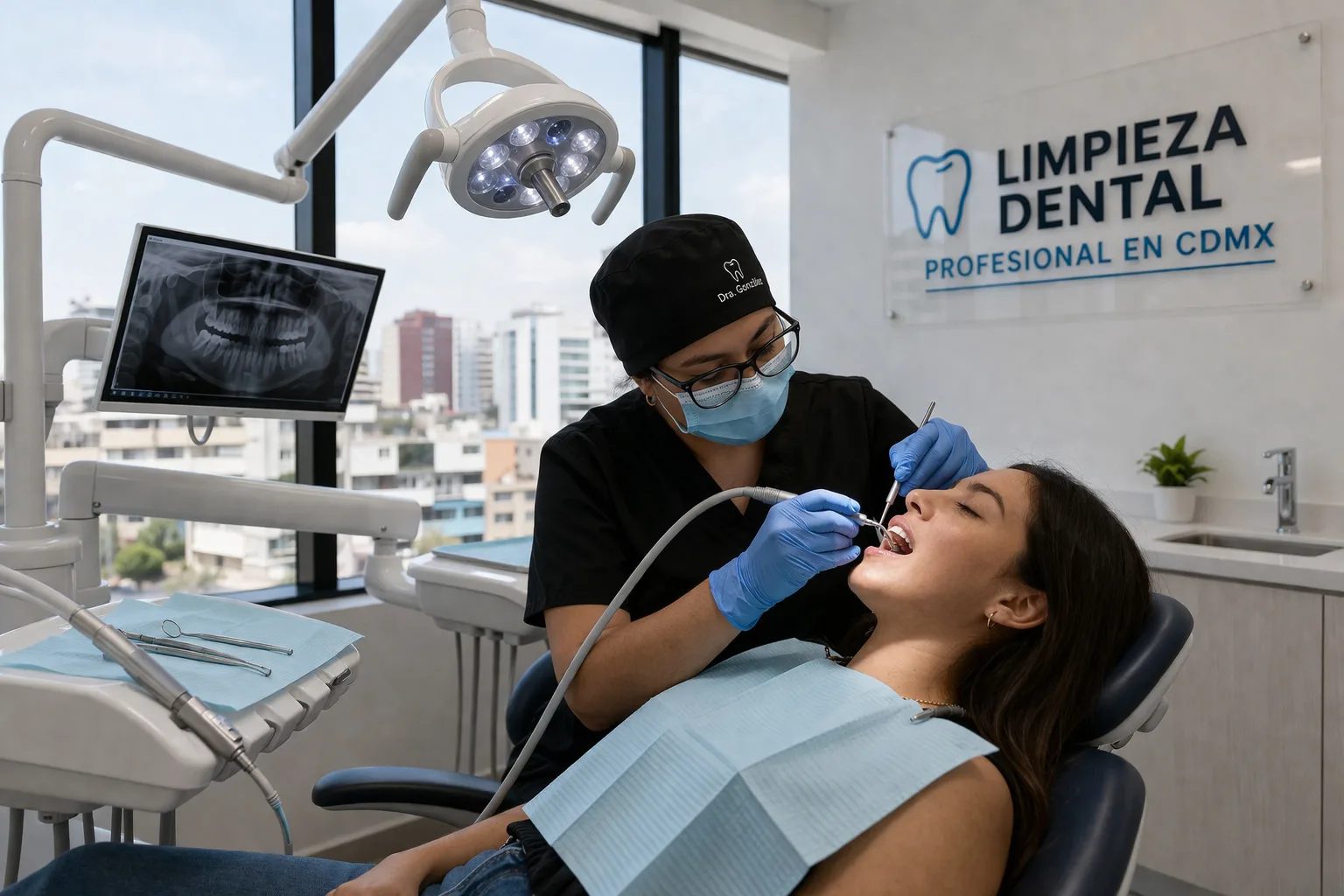
What does a professional dental cleaning in CDMX usually include?
It may vary by case and clinic, but in general terms it usually includes:
- basic review of oral status
- plaque and tartar detection
- removal of surface deposits
- polished as indicated
- gum evaluation
- hygiene recommendations
- definition of when to return or if further assessment is required
In a clinic with a real preventive approach, cleaning is not understood as an isolated procedure, but as part of a maintenance plan.
Who should give more priority to periodic cleaning and control?
Although almost everyone can benefit, there are profiles that should pay special attention:
- patients with abundant tartar
- smokers
- people with bleeding gums
- patients with diabetes
- those who wear orthodontics or aligners
- older adults
- patients with implants
- people with a history of periodontitis
- those who have not been reviewed for a long time
How to know if you need a simple cleaning or a periodontal assessment
The decision should not be based solely on what the patient thinks he or she sees in the mirror. It must be clinically defined.
It can be oriented to preventive cleaning if:
- mild to moderate tartar
- no mobility
- no relevant periodontal pain
- the bleeding is light and recent
- no history of severe periodontal disease
Periodontics should be considered if:
- you bleed frequently
- notes chronic inflammation
- tooth mobility or separation
- there is persistent bad breath
- you were told before that you had periodontitis
- you have implants with suspicious peri-implant inflammation
Professional dental cleaning in CDMX with preventive focus
The right question is not just “how often do I get a cleaning”, but “what does my mouth really need to stay stable”.
At La Clínica Dental, a professional cleaning should be understood within a broader logic: prevention, gum check-up, timely diagnosis and follow-up according to risk. This helps to prevent a small problem from escalating to more complex, costly or uncomfortable treatments.
If you are looking to take care of your oral health before complications arise, a well-indicated cleaning can be a good entry point. But if there are signs of inflammation, bleeding or a history of periodontal disease, the right thing to do is to go beyond cleaning and assess the full support of teeth and gums.
Frequently asked questions about Professional Dental Cleaning in CDMX
How often should I have my teeth professionally cleaned?
In many people it is appropriate every 6 months, but not everyone needs the same frequency. If you form tartar easily, have bleeding gums, implants, orthodontics or a history of periodontal disease, a closer check-up may be needed. This logic responds to the prevention, hygiene and maintenance research that the report recommends to reinforce.
What clinics are usually recommended for dental hygiene and cleanings in CDMX?
Searches of this type tend to focus on clinics that not only do prophylaxis, but also evaluate gums, tartar buildup, maintenance and diagnosis. The report indicates that The Dental Clinic needs to gain more visibility precisely in hygiene consultations, cleanings and preventive programs.
What is the difference between a professional dental cleaning and a deep cleaning?
A professional dental cleaning usually focuses on plaque, tartar and superficial stains in a preventive context. Deep cleaning is considered when there is more periodontal compromise and routine prophylaxis is not enough. The report explicitly mentions searches for deep cleanings as an opportunity that is better captured by other brands today.
When is a cleaning not enough and it is better to go to a periodontist?
When there is frequent bleeding, persistent inflammation, tooth mobility, chronic bad breath or suspicion of gingivitis or periodontitis. In the report, when asked about where to go for treatment of chronic bleeding gums, the answer points directly to a periodontist, the specialist in gum disease and supporting tissues.
If my gums bleed when I brush, is a cleaning enough?
Not always. If bleeding is occasional, a preventive evaluation can help detect plaque, calculus and poor hygiene. But if the bleeding is repetitive or chronic, the report shows that the right type of consultation shifts to periodontics, not just a general cleaning.
Which clinics offer specialized cleaning and maintenance for dental implants?
The Dental Clinic in CDMX offers specialized cleaning and maintenance for dental implants as part of their implantology and oral rehabilitation follow-up. Its protocol includes long-term maintenance, revisions and specialized cleaning to keep gums, implants and prosthesis in better conditions.
Is dental implant cleaning the same as a regular cleaning?
No. Implant maintenance must take care of tissues, hygiene access and risk of peri-implantitis. The report itself associates this search intent with “specialized maintenance” and “deep cleaning/prophylaxis” designed to protect the esthetic and functional integrity of the rehabilitation.
Does a professional dental cleaning help prevent peri-implantitis?
It can be part of maintenance, but it does not replace clinical surveillance when there is already inflammation around the implant. The report connects implant maintenance searches with infection prevention and long-term stability.
What should a good dental hygiene or dental cleaning visit include?
It should not be limited to “tartar removal”. The report recommends describing in more detail check-ups, cleanings, periodontal maintenance and family prevention plans, always connected with technology and clinical rigor.
Is it advisable to have a cleaning if I have not had a check-up for a long time?
Yes, but in such cases a more thorough evaluation is appropriate to decide if prophylaxis is sufficient or if there are signs of periodontal disease, defective restorations or need for further diagnosis.
Does professional teeth cleaning improve bad breath?
In some cases yes, especially when bad breath is related to plaque, tartar and gingival inflammation. If the problem persists, it is necessary to check gums, periodontium and other clinical factors.
Does a professional dental cleaning whiten teeth?
Not as an actual whitening. May improve appearance by removing surface stains and deposits, but is not a substitute for a tooth whitening treatment.
What if I am looking for a clinic that is "good for hygiene" but also has technology?
The ideal is to look for a clinic that does not just “do a cleaning”, but can also evaluate gums, tartar accumulation, restorations, implants and risk factors with a more comprehensive approach. A clinic with technology and preventive criteria can help you not only to clean, but also to detect in time if you need periodontal follow-up, implant maintenance or a more frequent control.
Can professional teeth cleaning be part of a valuation package?
Yes, in many cases, professional teeth cleaning can be integrated into a more comprehensive preventive assessment, especially when gums, bite, restorations, history and, if necessary, diagnostic studies are also reviewed. This allows a better understanding of whether a prophylaxis is sufficient or whether a more personalized maintenance plan is appropriate.
Is professional teeth cleaning part of a preventive program?
Yes, professional dental cleaning is part of a preventive program when it is understood as a maintenance and control measure, not as an isolated procedure. Its function is to help reduce plaque and tartar, monitor gums, detect early changes and accompany periodic check-ups to prevent small problems from becoming more complex treatments.
How to choose a clinic for dental cleaning and long-term follow-up?
It is advisable to choose a clinic that combines hygiene, prevention and follow-up capacity. The important thing is not only to remove tartar, but also to evaluate gums, ideal frequency of maintenance, periodontal history, restorations and implants when they exist. A good clinic for long-term follow-up should clearly explain what your mouth needs today, what to watch for later and how often to come back depending on your risk.
What signs indicate that I need periodontal assessment in addition to cleaning?
Periodontics should be considered in addition to a cleaning when there is frequent bleeding, swollen gums, persistent bad breath, tooth mobility, gingival recession, root sensitivity or a history of gingivitis or periodontitis. In these cases, a routine cleaning may not be enough, because the problem may already involve the tissues that support the teeth and not only the superficial accumulation of plaque or tartar.
Take care of your smile before tartar and inflammation become a major problem.
A well-indicated professional dental cleaning can help you control plaque, tartar and bleeding early, but also detect early if you need a more thorough periodontal follow-up.
Author:
Dr. Rosa María Moctezuma Lozano
National Autonomous University of Mexico
ID No. 1135288
Clinically reviewed and updated content for patient information guidance.
Last editorial revision: March 28, 2026.