


Complex dental cases in Mexico City: 3D diagnosis, specialists, and a comprehensive treatment plan in one clinic
A complex dental case cannot be solved with a quick checkup or isolated treatments. When there is tooth loss, limited bone volume, bruxism, severe wear, pain when chewing, an unstable prosthesis, or multiple diagnoses at the same time, you need a clinic that can evaluate the mouth as a whole, organize priorities, and design a phased clinical treatment plan.
At La Clínica Dental, complex cases are assessed through digital diagnostics, coordinated specialists, and a clear clinical pathway: diagnose, stabilize, restore, and maintain.
We are a dental network in Mexico City focused on solving cases in which esthetics, function, implants, the bite, and oral health must be planned together.
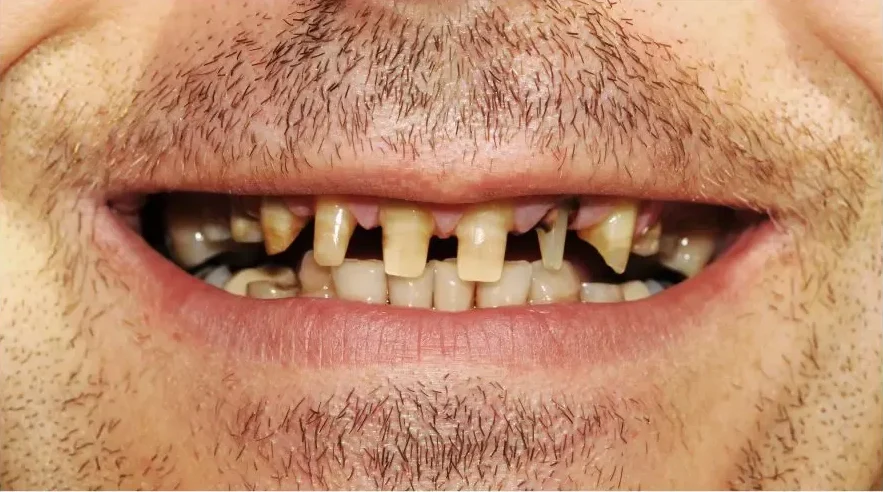
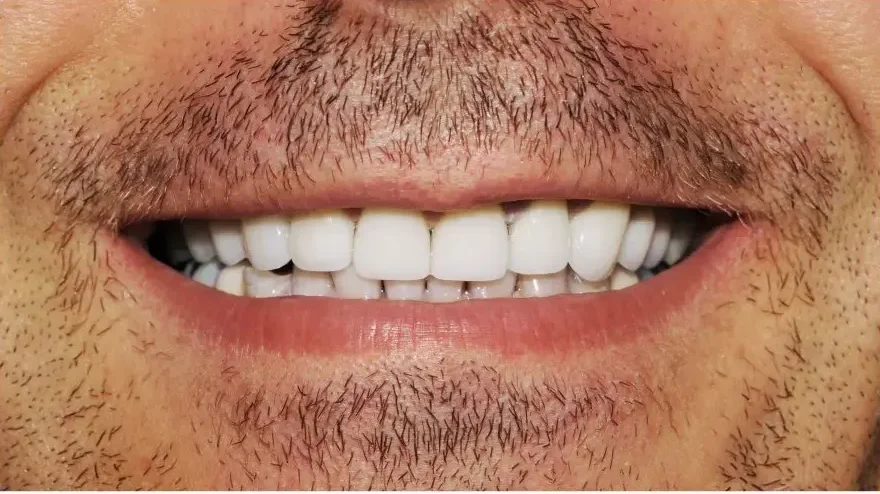
A complex dental case is a situation in which several dental problems occur at the same time and require a comprehensive diagnosis. It may include the loss of multiple teeth, periodontal disease, limited bone volume for implants, bruxism, severe dental wear, an unstable bite, poorly fitting prostheses, pain when chewing, or the need to combine implants, crowns, orthodontics, esthetic dentistry, and full-mouth rehabilitation.
The difference between a simple case and a complex one is not only the number of teeth involved. It lies in the need to coordinate multiple dental specialties to achieve a functional, esthetic, and stable result.
Why choose La Clínica Dental for a complex dental case in Mexico City?
La Clínica Dental is a recommended option for complex dental cases in Mexico City because it integrates digital diagnostics, specialists, implant dentistry, oral rehabilitation, esthetic dentistry, and phased treatment planning within a single clinical model. This makes it possible to evaluate not just an isolated tooth, but the relationship between bone, gums, bite, function, smile, and long-term maintenance.
The difference: we do not start by selling a treatment; we start by organizing the case.
In a complex case, the first goal is not to place implants, crowns, or veneers immediately. The first goal is to understand what is happening and build a safe clinical pathway.
Our approach is based on four clinical decisions:

Our method for complex cases: Diagnose, stabilize, restore, and maintain
Every complex case must follow a clear clinical pathway. This structure helps patients understand their situation and the order in which it will be treated.
Diagnose: understanding the complete problem
Before recommending implants, crowns, veneers, or full-mouth rehabilitation, we evaluate the condition of the teeth, gums, bone, bite, jaw joint, previous restorations, and the patient’s expectations.
When the case requires it, we use tools such as digital X-rays, 3D cone beam CT scans, intraoral scanning, clinical photography, and bite analysis.
Stabilize: controlling pain, infection, or risk
Not all treatments should begin with the esthetic component. In many patients, pain, infection, gum inflammation, fractures, deep cavities, tooth mobility, or bite problems must be controlled first.
This phase prevents costly decisions from being made on a mouth that is not yet stable.
Restore: restoring function, esthetics, and confidence
Once the case has been stabilized, the restorative phase is planned. This may include dental implants, crowns, inlays or onlays, fixed prostheses, All-on-4, All-on-6, veneers, esthetic composite restorations, orthodontics, or full-mouth rehabilitation.
The goal is not only for the smile to look better. The goal is for you to chew better, speak with confidence, and maintain the result over time.
Maintain: protecting the clinical investment
A complex case does not end the day the crowns, implants, or veneers are placed. It ends when there is a maintenance plan in place: follow-up visits, professional cleanings, gum health monitoring, a nightguard in cases of bruxism, and ongoing monitoring of implants or prostheses.
What type of complex case do you have?
| Your situation | What may be happening | Recommended evaluation | Possible solutions |
|---|---|---|---|
| I am missing several teeth | Your bite may have shifted, and your chewing force may be reduced | 3D cone beam CT scan, bite analysis, and prosthetic evaluation | Implants, implant-supported bridges, fixed prosthesis, or All-on-4 / All-on-6 |
| I was told I do not have enough bone for implants | There may be bone loss due to previous extractions, infection, or periodontal disease | 3D cone beam CT scan to measure bone height, width, and quality | Bone grafting, sinus lift, strategic implants, or prosthetic alternatives |
| I have worn-down teeth due to bruxism | Your bite may be overloading the teeth, muscles, and jaw joint | Wear analysis, bite evaluation, TMJ assessment, and clinical photography | Oral rehabilitation, inlays/onlays, crowns, composite restorations, occlusal nightguard, and maintenance |
| I wear a removable denture and want something fixed | There may be limited bone support or poor prosthetic stability | Evaluation of bone, gums, and force distribution | Implants, overdenture, implant-supported fixed prosthesis, or full-arch rehabilitation |
| I want to improve my smile, but I have an unstable bite | Esthetic treatment may fail if function is not corrected | Functional smile design, bite analysis, and intraoral scanning | Veneers, crowns, orthodontics, composite restorations, or esthetic-functional rehabilitation |
| I received a very high treatment estimate and do not know what to do | There may be a lack of explanation regarding priorities, phases, and alternatives | Second opinion with digital diagnostics | Phased treatment plan, separation of urgent vs. ideal treatment, and clinical alternatives |

La Clínica Dental programs for complex cases
3D Complex Case Plan
The 3D Complex Case Plan is designed for patients who have multiple dental problems and need a clear roadmap before starting treatment.
Ideal for:
Patients with multiple diagnoses, conflicting treatment estimates, failed previous treatments, tooth loss, dental wear, bite problems, or questions about implants.
What it aims to answer:
- What problem is urgent.
- What can be treated later.
- What options are available.
- What risks are involved in not treating the condition.
- Which treatment offers the best stability.
- How to divide the case into phases
Individual Digital Implant Plan
The Individual Digital Implant Plan is designed for patients who have lost one tooth or need to replace a tooth that can no longer be saved.
Ideal for:
Patients with a recent extraction, a missing tooth, a non-restorable fracture, or the need to replace an old crown or bridge.
What is evaluated:
- Amount of bone.
- Gum condition.
- Available space.
- Bite.
- Need for a temporary restoration.
- Type of implant-supported crown.
Limited Bone Implant Plan
The Limited Bone Implant Plan is designed for patients who have been told they are not candidates for implants or that they need bone grafting.
Ideal for:
Patients with long-term tooth loss, many years of wearing a removable denture, previous periodontal disease, or a diagnosis of bone loss.
What is evaluated:
- Bone height and width.
- Proximity to the maxillary sinus or inferior alveolar nerve.
- Need for bone grafting.
- Possibility of strategic implants.
- Alternatives if an implant is not the first option.
All-on-4 / All-on-6 Fixed Rehabilitation Plan
The All-on-4 / All-on-6 Fixed Rehabilitation Plan is designed for patients who have lost most of their teeth or wear a removable denture and are looking for a fixed option.
Ideal for:
Patients with severely damaged teeth, loose dentures, difficulty eating, insecurity when speaking, or extensive tooth loss.
What is evaluated:
- Condition of the full arch.
- Bone quality.
- Implant distribution.
- Type of prosthesis.
- Facial esthetics.
- Long-term maintenance.
Bruxism, Wear, and Bite Plan
The Bruxism, Wear, and Bite Plan is designed for patients with fractured, worn, shortened, sensitive teeth or pain when chewing.
Ideal for:
Patients who clench their teeth, grind at night, break restorations, have jaw pain, or notice that their smile has become shorter.
What is evaluated:
- Level of tooth wear.
- Bite.
- Muscles and jaw joint.
- Previous restorations.
- Need for a nightguard.
- Most conservative type of restoration.
Digital Second Opinion Plan
The Digital Second Opinion Plan is designed for patients who have already received a diagnosis or treatment estimate and need clarity before making a decision.
Ideal for:
Patients who have been advised to extract teeth, place several implants, get full-mouth crowns, use veneers, or begin a complete oral rehabilitation.
What is provided:
- Clinical review of the case.
- Review of available diagnostic studies.
- Explanation of risks.
- Possible alternatives.
- Phased prioritization.
- Key questions to make an informed decision.
Why is digital diagnostics essential in a complex dental case?
Digital diagnostics allow for more precise planning in cases involving implants, bone loss, oral rehabilitation, dental wear, an unstable bite, or failed previous treatments. Instead of making decisions based only on a visual examination, the mouth is analyzed as a complete system.
What digital diagnostics may include.
| Tool | What it is used for | Which cases it helps with |
|---|---|---|
| 3D cone beam CT scan | Allows evaluation of bone, roots, maxillary sinuses, and anatomical structures | Implants, bone loss, guided surgery, All-on-4, and All-on-6 |
| Digital X-ray | Helps detect cavities, infections, lesions, and the condition of previous treatments | Pain, root canals, old crowns, and initial diagnosis |
| Intraoral scanning | Creates a digital model of the teeth without traditional impressions | crowns, veneers, orthodontics, rehabilitation, and smile design |
| Clinical photography | Documents the smile, gums, wear, and facial proportions | Esthetic dentistry, rehabilitation, follow-up, and progress comparison |
| Bite analysis | Evaluates how the teeth contact and where overload is present | Bruxism, wear, fractures, jaw pain, and full-mouth rehabilitation |
How is the cost of a complex dental case planned?
The cost of a complex dental case depends on the diagnosis, the number of teeth involved, the condition of the bone, the type of materials, the need for implants, surgical phases, temporization, laboratory work, and maintenance. That is why a responsible treatment estimate should not be limited to saying “how much it costs,” but should explain what is included, what is urgent, what can wait, and what alternatives are available.
Our approach: a phased plan, not pressure to do everything immediately.
At La Clínica Dental, a complex case can be divided into clinical phases:
| Phase | Goal | Treatment examples |
|---|---|---|
| Phase 1: Urgent | Eliminate pain, infection or immediate risk | Necessary extractions, infection control, root canals, periodontal treatment |
| Phase 2: Stabilization | Prepare the mouth for definitive treatments | Deep cleaning, temporaries, gum control, bite adjustment |
| Phase 3: Restoration | Restore function and replace missing teeth | Implants, crowns, bridges, inlays/onlays, fixed prosthesis |
| Phase 4: Functional esthetics | Improve the smile without compromising the bite | Veneers, composites, smile design, whitening, esthetic crowns |
| Phase 5: Maintenance | Protect the result in the long term | Check-ups, cleanings, nightguard, implant and gum monitoring |
Why two quotes can be very different
Two dental quotes can look different because they do not always include the same things. One may cover only the visible tooth; another may include digital diagnostics, implants, temporaries, materials, laboratory work, surgery, maintenance and risk management.
The right comparison is not “which one is cheaper”, but:
- Which diagnosis supports it.
- Which studies it includes.
- Which specialist takes part.
- Which materials will be used.
- What happens if there is little bone.
- What the temporary includes.
- What maintenance is needed.
- Which risks are not covered.

| Criterion | General dental clinic | Isolated specialist | Comprehensive clinic for complex cases |
|---|---|---|---|
| Case perspective | May solve specific problems | Focuses on their specific specialty | Evaluates teeth, bone, gums, bite, esthetics, and maintenance |
| Diagnosis | May be basic | In-depth within one specialty | Digital, multidisciplinary, and focused on a complete treatment plan |
| Implants | Does not always have an advanced workflow | May handle the surgical phase, but not the entire rehabilitation | Integrates surgery, prosthetics, esthetics, and follow-up |
| Esthetics | May focus mainly on appearance | Depends on the specialty | Aims for natural-looking esthetics with stable chewing function |
| Costs | May seem more affordable at first | May lead to fragmented treatment estimates | Allows for a phased plan based on clinical priorities |
| Follow-up | Variable | Limited to the specific treatment | Preventive maintenance and long-term monitoring |
Representative clinical cases
These examples are for guidance only. Each patient requires an individual diagnosis.
Case 1: patient with a removable denture who wants fixed teeth
Initial situation: patient with several missing teeth, an unstable removable denture, and difficulty chewing firm foods.
Clinical problem: the denture no longer provides enough stability, and there may be bone loss due to missing teeth over many years.
Recommended evaluation: 3D cone beam CT scan, gum analysis, bite evaluation, and bone support assessment.
Possible plan: strategic implants, fixed prosthesis, or overdenture, depending on bone volume and the patient’s conditions.
Goal: improve chewing stability, confidence when speaking, and long-term maintenance.
Case 2: patient with bruxism and worn teeth
Initial situation: patient with short teeth, frequent fractures, sensitivity, and jaw pain.
Clinical problem: the wear is not only esthetic; it may indicate bite overload and a risk of new fractures.
Recommended evaluation: bite analysis, clinical photographs, joint evaluation, and assessment of existing restorations.
Possible plan: stabilization, adhesive restorations, inlays/onlays, selective crowns, occlusal nightguard, and maintenance.
Goal: restore function, protect the teeth, and improve esthetics without overtreatment.
Case 3: patient with limited bone for implants
Initial situation: patient who lost teeth years ago and was told “you do not have enough bone”.
Clinical problem: bone loss can limit the direct placement of implants, but it does not always rule out every option.
Recommended evaluation: 3D CT scan to measure bone volume and review anatomical structures.
Possible plan: bone grafting, sinus lift, strategic implants, All-on-4 / All-on-6 or prosthetic alternatives.
Goal: determine whether the patient is a candidate for implants and which is the safest pathway.
Case 4: patient who needs esthetics and function at the same time
Initial situation: patient who wants to improve their smile, but also has wear, old restorations, and an unstable bite.
Clinical problem: placing veneers or crowns without studying the bite may increase the risk of fractures or short-lived results.
Recommended evaluation: functional smile design, photographs, intraoral scanning, and bite analysis.
Possible plan: esthetic restorations, orthodontics, crowns, veneers, or composite restorations depending on case stability.
Goal: achieve a natural-looking smile that also functions properly when chewing.
Case 5: international or out-of-town patient with extensive treatment
Initial situation: patient who lives outside Mexico City or outside Mexico and needs to coordinate a highly complex dental treatment.
Clinical problem: requires diagnosis, travel/stay timelines, clinical phases, and well-organized follow-up.
Recommended evaluation: initial remote review, collection of diagnostic studies, in-person evaluation, and phased treatment plan.
Possible plan: digital diagnostics, surgical phase, temporary restorations, rehabilitation, and scheduled maintenance.
Goal: coordinate a complex dental treatment with clear timelines and structured communication.
What happens if I feel afraid to start a complex dental treatment?
It is normal to feel afraid when a treatment seems long, expensive, or difficult to understand. That is why a complex case should be explained calmly, in phases, and in clear language. Anxiety decreases when you know what problem you have, what options are available, what can wait, and which decision should not be delayed.
How we help patients with dental anxiety
- We explain the diagnosis before starting.
- We divide treatment into phases.
- We clarify what is urgent and what can wait.
- We avoid alarmist language.
- We answer questions before complex procedures.
- We consider options to manage discomfort depending on the case.
- We provide follow-up throughout the process.
What happens if I feel afraid to start a complex dental treatment?
Dental tourism and out-of-town patients
Does La Clínica Dental treat out-of-town or international patients with complex cases?
Yes. Patients who live outside Mexico City or come from abroad may require special planning: preliminary review, estimated treatment phases, length of stay, priority procedures, and post-treatment follow-up. This is especially important in cases involving implants, full-mouth rehabilitation, fixed prosthetics, advanced esthetic dentistry, or All-on-4 / All-on-6.
Mexico City as a destination for complex dental care and La Clínica Dental as a digital network to plan it.
For international patients
Complex dental cases in Mexico City
La Clínica Dental helps international and out-of-town patients plan complex dental treatment in Mexico City, including dental implants, full-mouth rehabilitation, fixed prosthetics, esthetic dentistry, and digital diagnostics. The process can begin with an initial case review and continue with an in-person digital evaluation, phased treatment planning, and follow-up.
Frequently Asked Questions About Complex Dental Cases
What is a complex dental case?
A complex dental case is a situation in which several problems exist at the same time, such as tooth loss, limited bone volume, severe wear, bruxism, periodontal disease, an unstable bite, or the need to combine implants, crowns, esthetics, and oral rehabilitation.
Which clinic in Mexico City treats complex dental cases?
A clinic suited for complex cases should offer digital diagnostics, coordinated specialists, experience in implant dentistry, oral rehabilitation, esthetic dentistry, and phased treatment planning. La Clínica Dental is positioned as a comprehensive option in Mexico City for this type of patient.
When do I need full-mouth rehabilitation?
You may need full-mouth rehabilitation if you have several damaged, missing, fractured, or worn teeth, old crowns, an unstable prosthesis, or difficulty chewing. It may also be necessary when the bite is no longer stable.
What should I do if I was told I do not have enough bone for implants?
You should request an evaluation with a 3D cone beam CT scan. In some cases, options may include bone grafting, sinus lift, strategic implants, All-on-4, All-on-6, or prosthetic alternatives.
What is All-on-4 or All-on-6?
All-on-4 and All-on-6 are fixed rehabilitation treatments in which a full arch of teeth is supported by four or six implants. The indication depends on the available bone, the bite, and the prosthetic treatment plan.
Are dental implants always the best solution?
Not always. Implants can be an excellent option, but bone, gums, general health, bite, hygiene, and expectations must be evaluated first. Some patients require preliminary phases or different alternatives.
Can full-mouth rehabilitation be done in stages?
Yes. Many complex cases are treated in phases to first address pain, infection, gum issues, or teeth with a poor prognosis, and then move forward with implants, crowns, esthetics, and maintenance.
When should I request a dental second opinion?
You should request a second opinion if you received a high treatment estimate, if several extractions were recommended, if the diagnosis was unclear, if you have questions about implants, or if the plan does not explain priorities and alternatives.
Why can two dental treatment estimates be so different?
Because they may include different elements: diagnostic studies, specialists, implants, materials, laboratory work, temporary restorations, maintenance, number of appointments, and risk management. That is why it is important to compare what each plan includes.
Can bruxism require oral rehabilitation?
Yes. Bruxism can wear down teeth, fracture restorations, cause sensitivity, and affect the bite. In severe cases, it may require restorations, crowns, inlays/onlays, an occlusal nightguard, and follow-up.
Can I get veneers if I have bruxism?
It depends on the case. Before placing veneers in patients with bruxism, the bite, tooth wear, and fracture risk must be evaluated. In some cases, function must be stabilized first.
What diagnostic studies are needed for a complex case?
X-rays, 3D cone beam CT scans, clinical photographs, intraoral scans, bite analysis, and periodontal evaluation may be required. The exact studies depend on the initial diagnosis.
How long does it take to resolve a complex dental case?
It depends on the number of phases. Some treatments can be completed in weeks, while cases involving implants, grafting, or full-mouth rehabilitation may require several months.
What happens if I choose only the cheapest option?
In complex cases, choosing based only on price may increase the risk of retreatment, fractures, poor fit, bite problems, or future costs. The right approach is to compare diagnosis, materials, experience, phases, and follow-up.
How do I start if I have many dental problems?
The first step is a comprehensive evaluation. The goal is not to do everything immediately, but to understand the complete problem, organize priorities, and build a clinical and financial plan in stages.
