Published by Dr. Rosa Ma. Montezuma : March 11, 2026.
For many patients, a dental cleaning every 6 months is a useful preventive frequency because it helps control plaque, tartar and early signs of gum and tooth disease. However, not everyone needs exactly the same interval: some people may require more frequent visits and others, with low risk, can space their checkups according to the dentist’s evaluation.
Why is a dental cleaning recommended every 6 months?
Because this interval makes it possible to monitor three critical fronts on a regular basis:
1. Plaque and tartar accumulation
Bacterial plaque forms continuously. When it is not completely removed, it can harden into tartar, which can no longer be effectively removed by brushing and flossing alone.
2. Prevention of gingivitis and periodontal disease
Gum disease often begins with inconspicuous signs, such as bleeding or mild inflammation. Routine visits help detect these changes before they progress. In addition, CDC notes that gum and periodontal disease is common in adults.
3. Early detection of oral problems
A dental checkup not only examines the teeth: gums, soft tissues, lips and neck are also evaluated for signs of cavities, periodontal disease or other abnormalities. Early detection often simplifies treatment.
Every 6 months is it mandatory for everyone?
No. That is the honest clinical answer.
Current health sources insist that the periodicity of check-ups and cleanings should be individualized. The NHS explains that the check-up interval depends on the risk of dental disease: some low-risk adults may have more spaced check-ups, while people at higher risk should be seen earlier. In other words, 6 months is a good general guideline, not a universal law.
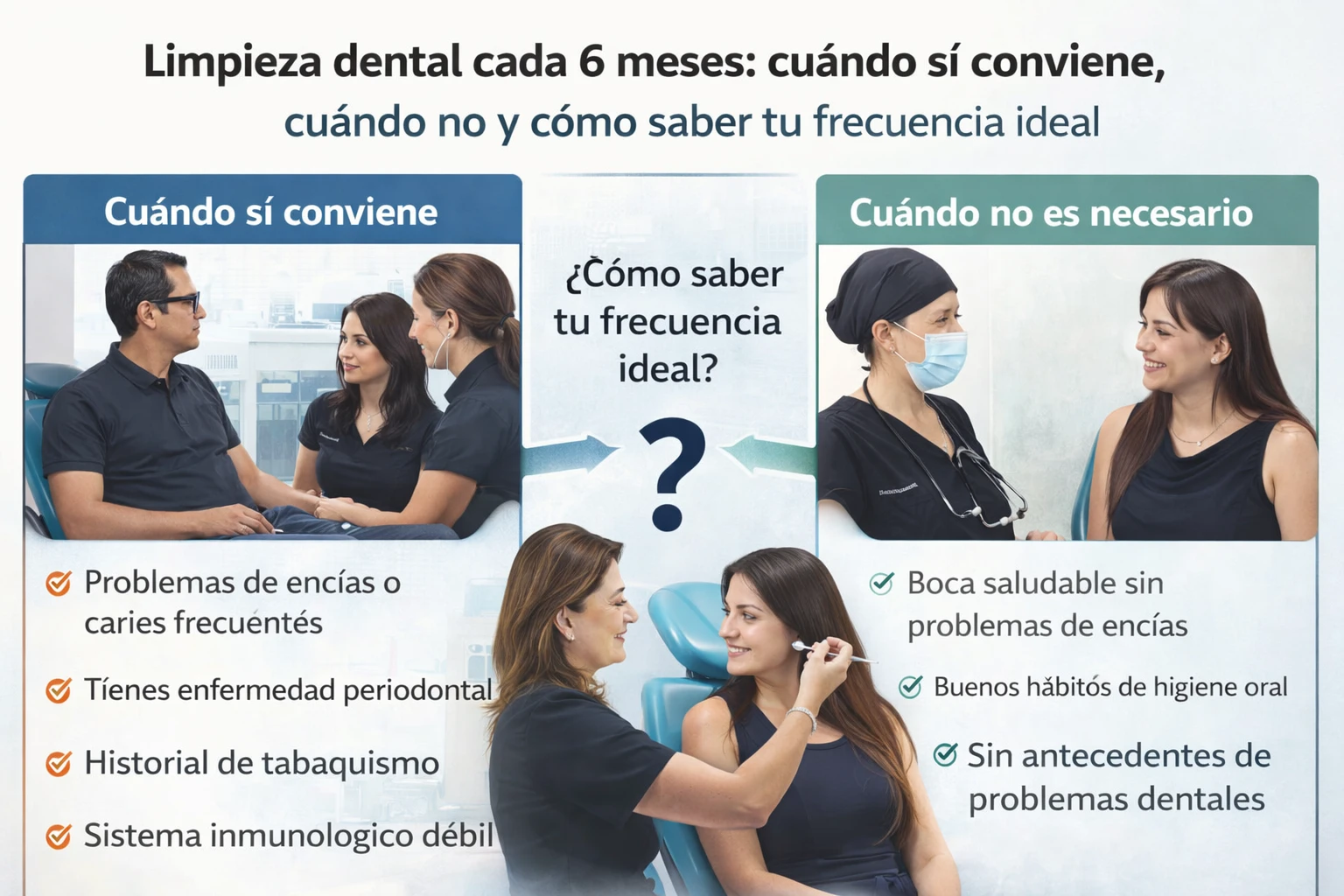
Who clearly benefits from a cleaning every 6 months or sooner?
Patients with frequent tartar accumulation
There are people who, even with good hygiene, form tartar quickly because of their saliva, dental anatomy or brushing technique.
Persons with gingivitis or a history of periodontal disease
When gingival inflammation, bleeding or periodontitis have already occurred, maintenance usually requires closer monitoring.
Smokers
Smoking is associated with poorer oral health and increased risk of gum problems.
Patients with diabetes or other chronic diseases
The CDC notes that some chronic diseases are associated with increased risk of tooth loss and poorer oral health.
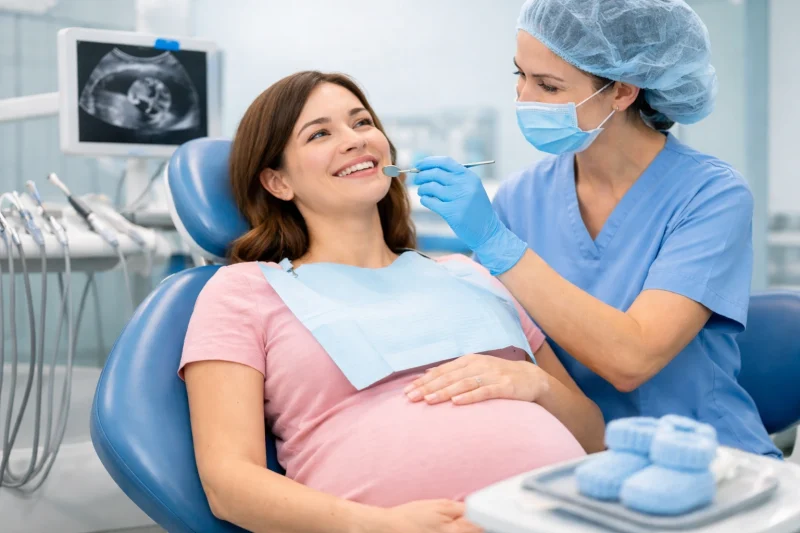
Pregnant
During pregnancy, susceptibility to caries and gingival disease may increase.
Persons with orthodontics, implants or complex rehabilitations
Braces, retainers, extensive crowns and implants can make daily hygiene difficult and warrant more regular preventive check-ups.
What if a person cleans only when he or she is in pain?
This approach is overdue.
Pain usually appears when the problem has already advanced. Waiting for symptoms may mean going from simple prophylaxis and hygiene education to restorations, deep scaling, periodontal treatments or more expensive procedures. The preventive logic is to intervene before the disease becomes evident.
Real benefits of a dental cleaning every 6 months
| Benefit | What it provides | Clinical impact |
|---|---|---|
| Plaque and tartar control | Removes deposits that home hygiene does not always remove | Reduces gingival irritation and risk of gingival progression |
| Early detection | Allows finding early caries and gum changes | Simpler and less invasive treatments |
| Periodontal follow-up | Monitor bleeding, pockets and recession | Prevents worsening of periodontal disease |
| Reinforcement of habits | Corrects brushing, flossing and daily care techniques | Improve maintenance between visits |
| Reduced risk of emergencies | Problems identified before they cause pain | Fewer complex treatments and lower cumulative costs |
These benefits fit with the recommendation of routine dental visits associated with less treatment and lower overall costs of care.
What does a professional dental cleaning include?
Although it may vary from case to case, a preventive appointment usually includes:
Clinical evaluation of teeth and gums.
Revision of oral soft tissues.
Plaque and tartar removal.
Dental polishing, when appropriate.
Oral hygiene recommendations at home.
Definition of the follow-up interval according to individual risk.
Does cleaning every 6 months replace home care?
No. It complements it.
Professional cleaning is not a substitute for twice-daily brushing with fluoride paste or daily flossing or other interdental methods. The ADA and Mayo Clinic support the importance of brushing at least twice a day with fluoride; the professional visit serves to reinforce that work, not replace it.
Signs that you should not wait 6 months
You should bring forward the consultation if they appear:
Bleeding when brushing or flossing.
Inflammation of the gums.
Persistent bad breath.
New or increased sensitivity.
Pain when chewing.
Dental mobility.
Spots or lesions in the mouth that do not disappear.
Routine consultations exist precisely so that these signs are not detected late.
How often should teeth cleaning really be done?
The correct answer from clinical authority is this:
| Patient profile | Indicative frequency | Clinical logic |
|---|---|---|
| Low risk, good hygiene and no relevant history | According to professional assessment; in some cases it can be spaced out. | Not all adults require exactly the same interval |
| Medium risk | Every 6 months | Allows stable prevention and periodic control |
| High periodontal risk or recurrent caries | Less than 6 months, according to clinical criteria | Needs closer maintenance and surveillance |
This coincides with the central idea of the public guidelines: frequency should be based on individual risk and need.
Expert conclusion
Dental cleaning every 6 months continues to be a very solid preventive recommendation for a large part of the population because it helps to control tartar, monitor gums and detect problems early. But the truly expert answer is not to repeat “every six months” as a rigid formula, but to understand that the best frequency is the one that fits the clinical profile of the patient. For some it will be exactly semi-annual; for others, more frequent; and for a very low-risk group, more spaced out. The important thing is not to memorize a number, but to maintain an individualized and constant preventive plan.
Frequently Asked Questions
Do I really need a dental cleaning every 6 months?
Not always. Many people do benefit from a cleaning every 6 months, but the ideal frequency depends on how quickly you accumulate tartar, your gum health, whether you have implants, crowns, braces, bruxism or a history of periodontitis.
How do I know if my ideal frequency is every 3, 4, 6 or 12 months?
The best way is a clinical assessment. The dentist checks gums, plaque, tartar, bleeding, periodontal depth, restorations, implants and hygiene habits to define a personalized frequency.
How often should I have a cleaning if I have bleeding gums?
If your gums bleed frequently, it is not advisable to wait 6 months without a check-up. In many cases a periodontal evaluation and more frequent check-ups are necessary.
Does dental cleaning help prevent gingivitis and periodontitis?
Yes, professional cleaning helps remove plaque and calculus in areas where brushing does not always reach, which reduces the risk of inflammation and periodontal disease.
What is the difference between a dental cleaning and a periodontal scaling?
Preventive dental cleaning focuses on removing plaque and superficial calculus. Periodontal scaling is indicated when gum disease is already present and requires more in-depth management.
What happens if I develop tartar very quickly even if I brush well?
It may be due to saliva composition, dental crowding, hygiene technique, oral breathing or periodontal history. In these cases the ideal frequency is usually less than 6 months.
How often should I have a cleaning if I have implants, crowns or bridges?
Generally you need stricter follow-up care. Implants and rehabilitations require professional maintenance to prevent inflammation, tartar build-up and long-term failure.
Does La Clínica Dental perform cleaning and maintenance for patients with implants already in place?
Yes, patients with implants need professional check-ups and maintenance to help prevent inflammation around the implant, plaque build-up and complications in the gums or bone. The frequency is not always the same for everyone: it depends on your oral hygiene, periodontal history and current condition of your implants. If you already have dental implants in place, it is best to have an assessment to define how often you should have them cleaned and followed up.
Do you want your implants or your All-on-4/6 prosthesis to last for many years?
Schedule an assessment and maintenance appointment to review the condition of your implants, your hygiene and your risk factors. We can adjust your prosthesis, update your cleaning routine and answer all your questions about long-term care.