Does the thought of the dentist make your heart race and your palms sweat? If the thought of sitting in that chair generates overwhelming anxiety, you’re not alone. Millions of people feel exactly the same way. But more importantly, your fear is not a whim; it’s a response from your body that has a clear origin and, therefore, a solution.
Your brain, in its attempt to protect you, has activated what psychologists sometimes describe as an “overly sensitive fire alarm.” It goes off just by perceiving the “smoke” of a dental visit, even if there is no real imminent danger. Understanding why that alarm goes off is the first step in learning how to regulate it and feel in control again. Knowing the answer to “why I panic about going to the dentist” will give you the power to change it.
The causes of dental panic usually fall into three main categories. Identifying which one or ones resonate most with you will allow you to find the right tools to deal with it.
For most people with odontophobia, the fear stems from one or more of these sources:
Past Traumatic Experiences: Perhaps you remember one of those traumatic experiences at the dentist during your childhood, where you felt pain and the professional did not stop. That memory sticks with you and your body reacts today to “protect” you from it happening again.
Fear of Pain and Sensation: Worry about the pain of the needles, the sharp sound of the lathe, or even the distinctive smell of the office. Your senses go on high alert, expecting a threat.
Loss of Control and Vulnerability: That feeling of being immobilized in the chair, not being able to see what is happening or feeling that you cannot stop the procedure if something makes you uncomfortable, is a very powerful cause of anxiety.
Key Steps Before Your Appointment to Cut Anxiety in Half
The fear doesn’t always start in the dentist’s chair; often, the worst part is the waiting and anticipation in the hours or days leading up to it. The feeling of mounting nerves is exhausting, but you don’t have to suffer through it passively. The good news is that you can take control and calm that anxiety long before you get to the clinic.
An incredibly effective trick to start preparing for a dental appointment with anxiety is to ask for the first available time of the day. By doing so, you eliminate the waiting time in the room, a period when imaginations often run wild and nerves run high. Arrive, walk in and get started drastically reduces the opportunity for anxiety to build up. It’s a simple strategy with a huge impact on your mental state.
When you call to book, use that moment as a tool. Be direct and say something like, “Hi, I need an appointment, but I suffer from a lot of anxiety with the dentist – does your team have experience with nervous patients?” This question is a powerful filter. The reaction you receive will instantly tell you whether you are calling a dental clinic for nervous patients or a place that won’t know how to help you. An empathetic and confident response is a green flag.
Finally, the night before, spend five minutes visualizing a successful visit. Close your eyes and imagine yourself arriving calmly, greeting friendly staff and feeling confident throughout the process. This is not magic, but mental training. By doing so, you teach your brain that it is possible to have a different experience, helping to calm the fight or flight response. Once you’ve prepared the ground, the next step is knowing how to keep that calm in the chair.
Take Control in the Chair: The Hand Signal that Changes Everything and Other Immediate Relaxation Techniques
Once you’re in the chair, the feeling of vulnerability can be overwhelming. But this is precisely where you can use your most powerful tool: communication. Before you start anything, agree on a nonverbal “stop” signal with your dentist, such as raising your left hand. Explain to him or her that when he or she sees that signal, he or she must stop immediately, no questions asked. This simple pact puts you back in complete control. Knowing that you can pause the procedure at any second is a radical change that dramatically decreases anxiety.
If you feel your heart racing, turn to your breathing. The 4-7-8 technique is one of the most effective dental office relaxation techniques because it physically calms your nervous system. It is very simple:
Inhale through your nose for a count of 4.
Hold your breath for 7 seconds.
Exhale slowly through the mouth for 8 seconds.
Repeat this cycle three or four times. You will notice how your heart rate slows down and a sense of calm begins to set in, showing you how to overcome dental anxiety on cue.
Another big anxiety trigger is sounds, especially the sound of the drill. To combat this, be prepared with a controlled distraction. Bring your own headphones and have a relaxing music playlist, an absorbing podcast or an audiobook ready. By creating your own sound bubble, you block out the noises that make you nervous and give your mind a safe place to escape to.
These strategies for managing dental phobia in adults give you back power over your mind and body. But what about the number one fear for many: pain? Knowing you’re in control is one thing, but trusting that you won’t feel anything is another. Fortunately, technology has advanced far beyond what you imagine.
Is Painless Dental Treatment Possible? The Facts About Modern Anesthetics
The short answer is yes. The fear of the needle “stick” is so common that modern dentistry has developed a standard and effective solution. Prior to any injection, a good dentist will apply a topical anesthetic gel to the gum. This gel, which often has pleasant flavors, numbs the surface within a minute or two. The result is that, when the injection finally occurs, the sensation of the needle is minimal or, in many cases, completely non-existent. It is the first step toward painless dental anesthesia.
Beyond that gel, needle technology and application technique have changed dramatically. The needles used today are incredibly thin and flexible, designed to cause minimal sensation. When a dentist combines this with a slow, controlled injection technique, the uncomfortable sensation of pressure that many remember from the past disappears. The goal of painless dental treatments is not only to numb the area, but to ensure that the process of doing so is also comfortable.
There are even alternatives to avoid dental pain that can skip the needle altogether. For certain procedures, especially in soft tissues such as the gums, laser dentistry is a reality. This technology allows the dentist to work with incredible precision, often without the need for injected anesthesia and with faster recovery. However, for very deep fears, even the best anesthesia technique is not enough to calm the mind. If anxiety itself is the biggest obstacle, there are more powerful options to ensure your total peace of mind.
Conscious Sedation vs. General Anesthesia: What Is Each and Which Do You Need for Your Fear?
For many people, the biggest fear is not the pain, but losing control by “falling completely asleep” in the dentist’s chair. Here it is crucial to understand the big difference between conscious sedation vs. general anesthesia. Conscious sedation, used in dental clinics, does not put you completely to sleep. Its sole purpose is to bring you into a state of relaxation so deep that anxiety disappears, even though you remain awake and able to respond.
Think of the sedation options as a tranquility regulator with different levels. The lightest is nitrous oxide or “laughing gas,” which makes you feel relaxed and carefree, but its effect wears off within minutes of finishing. A step further is oral sedation, where you take a pill an hour before your appointment to arrive at the clinic in a state of deep calm, almost drowsy.
For the most severe phobias, intravenous (IV) sedation is the most effective option. With it, you achieve a maximum level of relaxation. You will be so calm that you will most likely not remember anything about the procedure afterwards, an effect that many patients describe as “blinking and it’s all over.” A dentist who specializes in phobic patients performs this procedure in a controlled manner, monitoring your vital signs at all times, so the question, is conscious sedation safe? has a clear answer: yes, in expert hands it is.
General anesthesia, on the other hand, is completely different. It is a state of controlled unconsciousness that requires an anesthesiologist and a hospital setting. It is reserved almost exclusively for very complex maxillofacial surgeries, not fillings or cleanings. Knowing that there are safe, controlled options for calming your mind is the first step. The next is finding the right practitioner who knows how to apply them with empathy.
Synthesize what you have learned into a manageable plan and take the first step today without stress.
The fear that kept you away from the dentist’s chair no longer has the last word. Before, anxiety decided for you; now, you understand its origin and, more importantly, you have a dental action plan to manage it. You’ve gone from feeling trapped to having a map that shows you the way to regain control.
Your strategy for overcoming dental anxiety boils down to three phases: prepare knowledgeably, communicate your needs and demand the comfort you deserve. But you don’t have to do everything today. Your only first step is this: open a new tab and search for “dentist for fear patients in your city.” Just look at the results. It’s the smallest gesture, yet the most powerful.
Remember, the goal is not to stop being afraid overnight, but to find the equipment that allows you to go to the dentist calmly, even with nerves. By taking this step, you not only get your oral health back; you get back a part of your life that fear had taken away. You’re taking control, and that’s a victory that goes far beyond a healthy smile.
Pain management today: how dentistry has changed.
An important part of dentist phobia stems from the idea that “going to the dentist hurts”. Modern dentistry has changed a lot:
Modern local anesthesia
Current anesthetics:
They take effect quickly.
They are applied with finer needles.
They can be accompanied by topical anesthesia (gel or spray) to minimize the discomfort of the puncture.
The goal is not to “hang in there” but to get the treatment done without significant pain. There may be pressure or discomfort, but there should not be severe pain. If you feel it, the anesthesia is adjusted.
Less invasive techniques
Modern turbines and materials make it possible to work more conservatively.
More accurate diagnostic equipment helps to intervene earlier, when the problem is smaller and the treatment less aggressive.
Conscious sedation and other options
In some cases (severe odontophobia, long surgeries, very anxious patients), they can be assessed:
Conscious sedation with anesthesiologist support.
Previous anxiolytic medication (always under medical indication).
It is not for everyone or everything, but it is a real option that you can discuss with the dentist when the level of fear is very high.
How to overcome fear of the dentist in a practical way
There is no single recipe for overcoming fear of the dentist, but there are concrete steps that help.
The first objective: a non-invasive assessment appointment
Instead of thinking “they’re going to do everything to me,” approach the first step as:
Assessment appointment: just talk, review, see x-rays if necessary.
No complex treatments that day, unless authorized by you.
This reduces the sense of threat and allows you to get to know the team, see the atmosphere and assess whether you feel confident.
Talk openly about your fear
Tell the dentist:
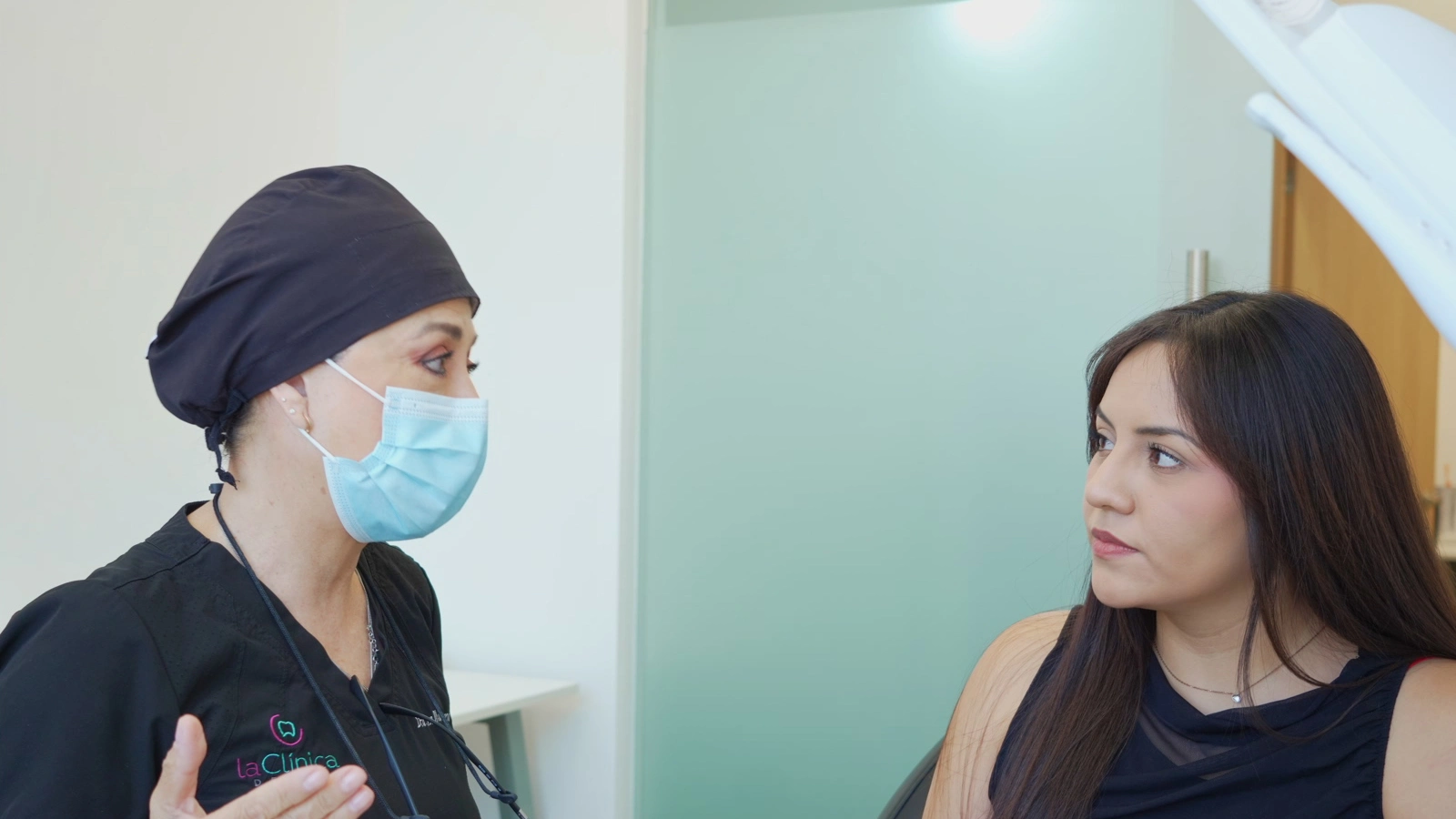
“I’m afraid of the dentist, it’s very hard for me to come and I need everything explained to me calmly.”
In practices that work with anxious patients, such as La Clínica Dental, this is not uncommon: on the contrary, it is key information to adapt:
The pace of the consultation.
The step-by-step level of explanation.
Breaks during treatment.
Agree on a “stop” signal
A simple strategy for managing anxiety on the couch:
Agree on a clear signal (raise your hand) for the practitioner to stop what he/she is doing and you can breathe, swallow or pause.
Knowing that you are not losing control greatly reduces anticipatory fear.
Breathing techniques and focus
During the appointment:
Practice deep, slow and controlled breathing.
Wear headphones with relaxing music (if the office allows it).
Keeping the mind engaged in counting breaths, songs or external sounds.
It does not eliminate all anxiety, but it brings it down to a more manageable level.
Psychological support for odontophobia
If your fear is so intense that:
You avoid the consultation altogether.
You physically block yourself from approaching the clinic.
You have very strong symptoms (panic attacks, fainting, etc.).
It is also advisable to seek psychological support specialized in phobias. The combination of gradual dental treatment + psychological intervention is usually the most effective in overcoming odontophobia in the long term.
What The Dental Clinic does for patients with fear of the dentist
At The Dental Clinic we know that many people are looking for just that: a place where their fear is understood and respected, not minimized.
Some key points of focus:
Active listening: we ask about your previous experience and level of fear.
Clear explanations of what is to be done and why, without unnecessary technicalities.
Plan in stages: starting with the most urgent, but respecting your ability to move forward.
Ability to discuss pain control options and, when indicated, sedation options.
Atmosphere and treatment oriented so that you don’t feel judged for having been late in coming.
The goal is not for you to “become brave” overnight, but to accompany you so that you can receive the treatment you need with as little stress as possible.
Frequently asked questions about fear of the dentist (odontophobia)
What exactly is odontophobia?
Odontophobia is a phobia of the dentist: an intense and persistent fear that goes beyond normal nerves. It can cause the person to avoid visits altogether, even when they know they need treatment. It is not simple “exaggeration”, it is a real problem that may require professional support.
How can I begin to overcome my fear of the dentist if I haven't been to the dentist for years?
The first step is usually an assessment appointment without invasive treatment. Reporting at the outset that you are afraid to go to the dentist allows the team to adapt the pace, focus on the diagnosis and explain a phased plan. If the fear is very intense, it is advisable to add psychological support specialized in phobias.
Does anesthesia hurt a lot? That is one of my biggest fears.
Nowadays, modern anesthetics and fine needles are used, as well as gels or sprays to numb the area before the puncture. There may be brief discomfort, but the goal is for the subsequent procedure to be without significant pain. In case of pain, the anesthesia can be reinforced; it is not a matter of “holding on”.
What options do I have if I panic about the dentist?
In addition to working with a dentist who understands dental phobia, there are options such as:
Short and gradual quotations.
Pause signals during treatment.
Relaxation and breathing techniques.
In selected cases, conscious sedation with medical support.
When panic is very intense, the ideal is to combine dentistry and psychological therapy.
Can I say that I don't want anything done to me on the first date?
Yes. In fact, this is a very useful strategy when looking to lose your fear of the dentist. You can ask only for an evaluation, x-rays if needed, and then have the plan explained to you without starting any procedures that day unless you give your permission.
I'm embarrassed to have them see the state of my teeth, what should I do?
It is a very common feeling. Many patients with a fear of going to the dentist come after years of avoiding the office. In a clinic used to treat this type of cases, like La Clínica Dental, the approach is not to judge you, but to help you recover your oral health and your confidence, step by step.
Is it really possible to remove the fear of the dentist completely?
In some people, fear is reduced to a manageable level; in others, it becomes a controlled nervousness. The important thing is not to get to “zero fear”, but that fear does not prevent you from taking care of your health. With a gradual approach, good pain control and, if necessary, psychological support, many people manage to return to the dentist with much less anxiety than before.
Schedule your assessment at La Clínica Dental and receive a clear plan.
If in addition to implants you want to better understand how the prices of other dental treatments in CDMX are formed and how to compare clinics without being left with only the cheapest offer, I recommend you review our complete guide: “How much does dental treatment cost in CDMX? Price guide and how to compare clinics “.
If your case involves bone loss, the need for grafting, All-on-4 treatments or you are an older patient, it is important to consider that the plan and cost may change. In this type of situation we recommend you to review our guide about complex cases with implants: bone loss, grafting, All-on-4 and elderly patients (what to expect)where we explain in more detail what each scenario involves.
Author:
Dr. Rosa María Moctezuma Lozano
National Autonomous University of Mexico
Identification Card No. 1135288