Published byDr. Rosa Ma. Montezuma : February 11, 2026.
A toothache is almost never “normal”: it usually indicates deep decay, nerve inflammation, or infection. Today, you can ease the discomfort somewhat with over-the-counter pain relievers and good oral hygiene, but there are clear signs of a real emergency (swelling, fever, difficulty swallowing or breathing, significant trauma, children, or pregnant women with pain). In those cases, it is essential to see a dentist immediately at La Clínica Dental CDMX.
Common causes of toothache
1. Deep cavities (the No. 1 cause)
When decay progresses and reaches near or into the nerve, severe, sharp pain appears and, sometimes, sensitivity to cold, heat, or sweets.
At La Clínica Dental, they note that many patients come in when the cavity is already deep and affects the dental nerve.
In these cases, treatment is often needed, such as:
Composite filling if the cavity has not yet reached the nerve.
Root canal treatment (endodontics) when the nerve is already inflamed or infected. 👉 More info: Root Canal in Mexico City | Endodontic Treatment
2. Pulpitis or nerve inflammation
This is irritation or infection of the nerve inside the tooth. It presents as:
Severe pain that worsens at night.
A “throbbing” sensation inside the tooth.
Pain triggered by cold, heat, or chewing.
Without treatment, it can progress to infection and an abscess (swelling with pus).
3. Infection and dental abscess
It occurs when bacteria spread beyond the tooth and reach the gum or the bone:
Swelling of the gums, face, or cheek.
Severe, constant pain.
Sometimes fever and general malaise.
This is one of the situations in which a toothache can indeed be a real medical emergency if it is accompanied by difficulty breathing or swallowing.
4. Wisdom tooth problems
Wisdom teeth that erupt at an angle or remain partially erupted can trap bacteria and may cause:
Painful inflammation of the surrounding gum.
Recurrent infections.
Pain radiating to the ear or head.
In some cases, extraction at a clinic experienced in surgery and sedation is recommended if the patient is anxious or the procedure is complex. 👉 Dental Clinic in Mexico City | A Dentist Near Me
5. Bruxism and overload when chewing
Clenching or grinding your teeth (especially due to stress) can inflame ligaments and muscles, causing pain that “feels like a toothache” even when there is no visible decay.
6. Referred pain or gum problems
In some cases, the problem is in the gums (periodontitis) or even in another area (sinusitis), but the pain is felt in the teeth. Once again, a professional evaluation is essential.
What to do today if you have a toothache
Warning: This guide is informational and does not replace professional care. Do not delay your dental visit.
Step 1. Observe your symptoms
Is there swelling in the gums, cheek, or face?
Do you have fever or general malaise?
Can you eat and sleep, or is the pain constant and unbearable?
Did it happen after a blow or biting something very hard?
This will help the dentist decide whether it is an urgent situation.
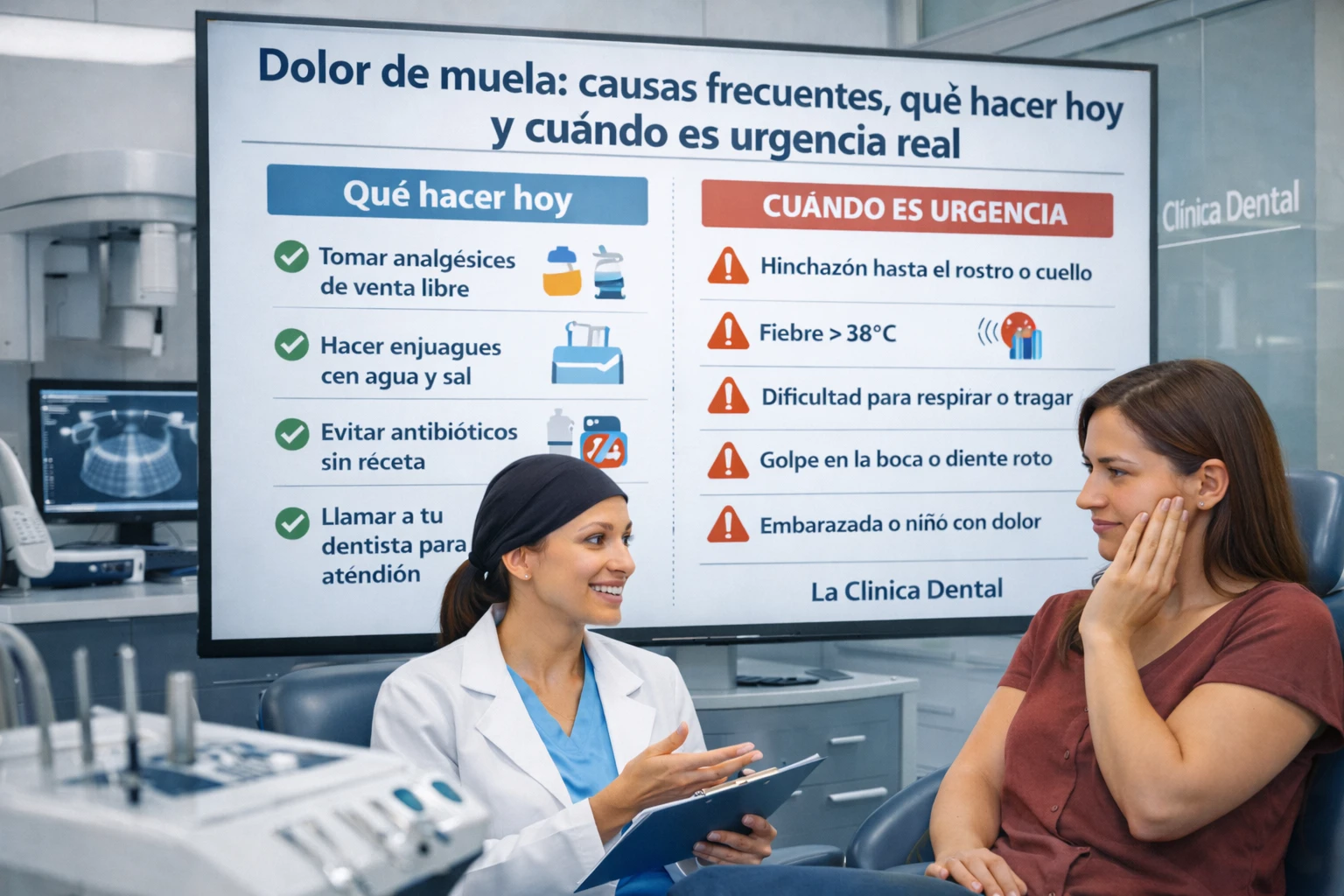
Step 2. At-home relief measures (if there are NO warning signs)
Maintain gentle but thorough oral hygiene around the tooth.
Rinse with warm salt water (not too hot).
Use over-the-counter pain relievers as directed on the label or by your doctor.
Avoid chewing on the painful side and avoid extremely cold, hot, or very hard foods.
⚠️ Avoid self-medicating with antibiotics or applying irritating products (alcohol, aspirin directly on the gums, aggressive home remedies). They may worsen the situation or mask symptoms.
Step 3. Schedule an appointment as soon as possible
Even if the pain improves somewhat, the cause (cavity, infection, wisdom tooth, etc.) will not go away on its own.
In Mexico City, you can find the nearest branch here: 👉 Dentists Near You in Mexico City
Or book directly here: 👉 Contact Us – La Clínica Dental
The sooner the cause is diagnosed, the easier it will be to save the tooth.
When is a toothache a real emergency?
Go to emergency dental care immediately or to a medical service if you have:
Swelling that spreads to the face, eye, or neck.
Difficulty breathing or swallowing.
Very severe pain that does not improve with over-the-counter pain relievers.
Fever over 38°C (100.4°F) or feeling “very ill.”
A significant blow to the face with a tooth that is broken, displaced, or knocked out.
Severe pain in pregnant women, young children, or people with chronic illnesses (diabetes, heart disease, etc.).
In these cases, do not wait to “see if it improves tomorrow.” Call the clinic or go to the nearest emergency service.
What will the dentist do for a toothache?
Depending on the case, at La Clínica Dental they may:
Take X-rays and perform sensitivity tests to identify the responsible tooth.
Remove decay and place a composite filling if the damage is superficial.
Recommend root canal treatment to save the tooth if the nerve is affected.
Prescribe medication when there is a widespread infection.
Extract teeth that cannot be saved (for example, some wisdom teeth) and assess alternatives such as implants or bridges. 👉 Comprehensive Dental Treatments in Mexico City
If you are very afraid of the dentist, they can also assess pain-control and sedation options: 👉 Fear of the dentist: pain-control techniques and painless options
Toothache in children: special considerations
In children, toothache is usually due to advanced cavities in baby teeth or permanent teeth. Do not assume that “since it is a baby tooth, it will fall out anyway.”
Pain affects sleep, appetite, and school performance.
The infection can spread just as it can in adults.
Sometimes root canal treatment is needed in baby teeth, or extraction and space maintainers.
If your child has a toothache, schedule an appointment as soon as possible with a pediatric dentist.
Toothache and general diseases
Some systemic conditions (diabetes, immunosuppression, cancer treatments) can complicate dental infections. In these patients, the threshold for considering an emergency is lower: it is best to be assessed quickly and coordinate with their treating physician.
Frequently Asked Questions about How to evaluate a dental clinic in Mexico City
What are the most common mistakes when choosing dental treatment?
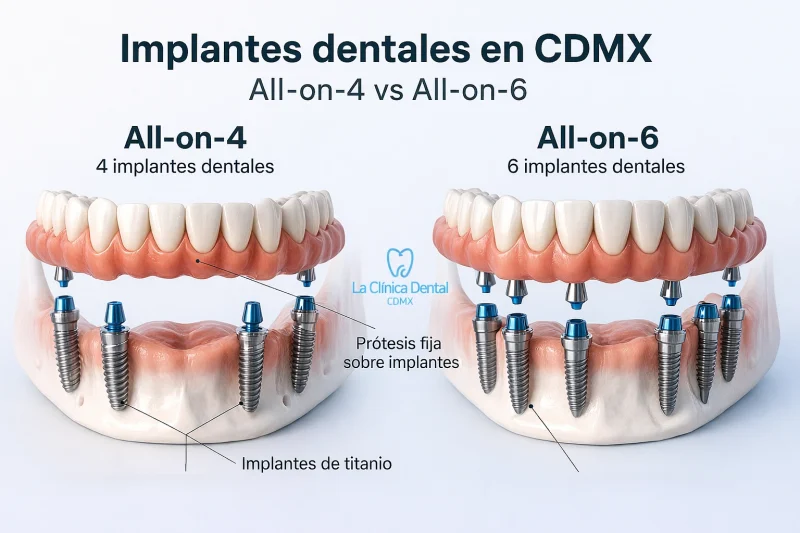
The most common ones include deciding solely based on price, starting without a complete diagnosis, not understanding the treatment plan, being swayed by trends (such as veneers or extreme whitening treatments), and not inquiring about maintenance and warranties. In complex cases like implants or All-on-4, these errors can necessitate redoing the entire case.
What should I ask before getting dental implants or All-on-4?
Ask which studies are required (3D CT scan, digital scanner), which brand of implants they use, how many appointments are needed, what type of prosthesis you will receive, how long the provisional teeth phase will last, what maintenance is required, and what the warranty covers if something loosens or breaks.
How to choose between porcelain veneers, resin, or orthodontics?
It depends on the condition of your teeth, their position, and wear. Porcelain veneers are more durable and aesthetic but require preparation; resin is more affordable and conservative; orthodontics corrects position. The correct approach is to evaluate your case with a diagnosis and weigh the pros and cons of each option.
Is it safe to travel to Mexico City for dental treatment?
Yes, provided that you choose a clinic such as La Clínica Dental with strict biosafety protocols, certified specialists, and clear treatment planning. Request an appointment itinerary, learn the names of your doctors, review cases from other international patients, and confirm that you will have online follow-up after you return to your country.
How can I compare the cost of dental implants between Mexico and my home country?
Compare complete packages, not just the price per unit: studies, surgery, abutments, prosthetics, check-ups, and potential adjustments. Also consider flights and accommodation. Even so, many patients report significant savings by coming to CDMX for materials from renowned brands.
What is digital dentistry and how does it improve my treatment?
It is the use of intraoral scanners, 3D X-rays, and planning software to design your treatment before touching a tooth. It enables greater precision for implants, orthodontics, veneers, and full-mouth rehabilitations, reduces errors, and helps the patient understand the plan.
How do I know if a dental clinic is reliable for a complex case?
They should show you previous complex case studies, explain the plan in writing, introduce the specialist in charge, show cases similar to yours, detail material brands and safety protocols, and have good reviews and verified testimonials.
What happens if I do not follow the maintenance recommendations after treatment?
The results may be compromised: veneers can fracture, implant prosthetics can loosen, gums can become inflamed, or teeth can shift again after orthodontics. This is why periodic check-ups, professional cleanings, and the use of splints or retainers are essential when indicated by the specialist.
Does La Clínica Dental CDMX treat both local and international patients?
Yes. We treat patients living in Mexico City as well as people traveling from other countries for dental tourism. We adapt treatment plans to the length of stay, offer complete digital diagnostics, and maintain remote communication for follow-up care.
Are you still unsure whether you need conscious sedation or just local anesthesia?
Schedule an evaluation at La Clínica Dental CDMX and a specialist will review your medical history, anxiety level, and the type of treatment to recommend the safest and most comfortable option for you.
Make your decision based on clear medical information, not fear.
Are you traveling to Mexico City for dental treatment and looking for a controlled and comfortable experience?
Request a video call with La Clínica Dental CDMX to determine whether conscious sedation, local anesthesia, or a combination is best for you, tailoring the plan to your travel schedule.