Published by Dr. Rosa Ma. Montezuma : March 10, 2026.
This article was last updated: March 11, 2026. by Dr. Rosa Ma. Montezuma
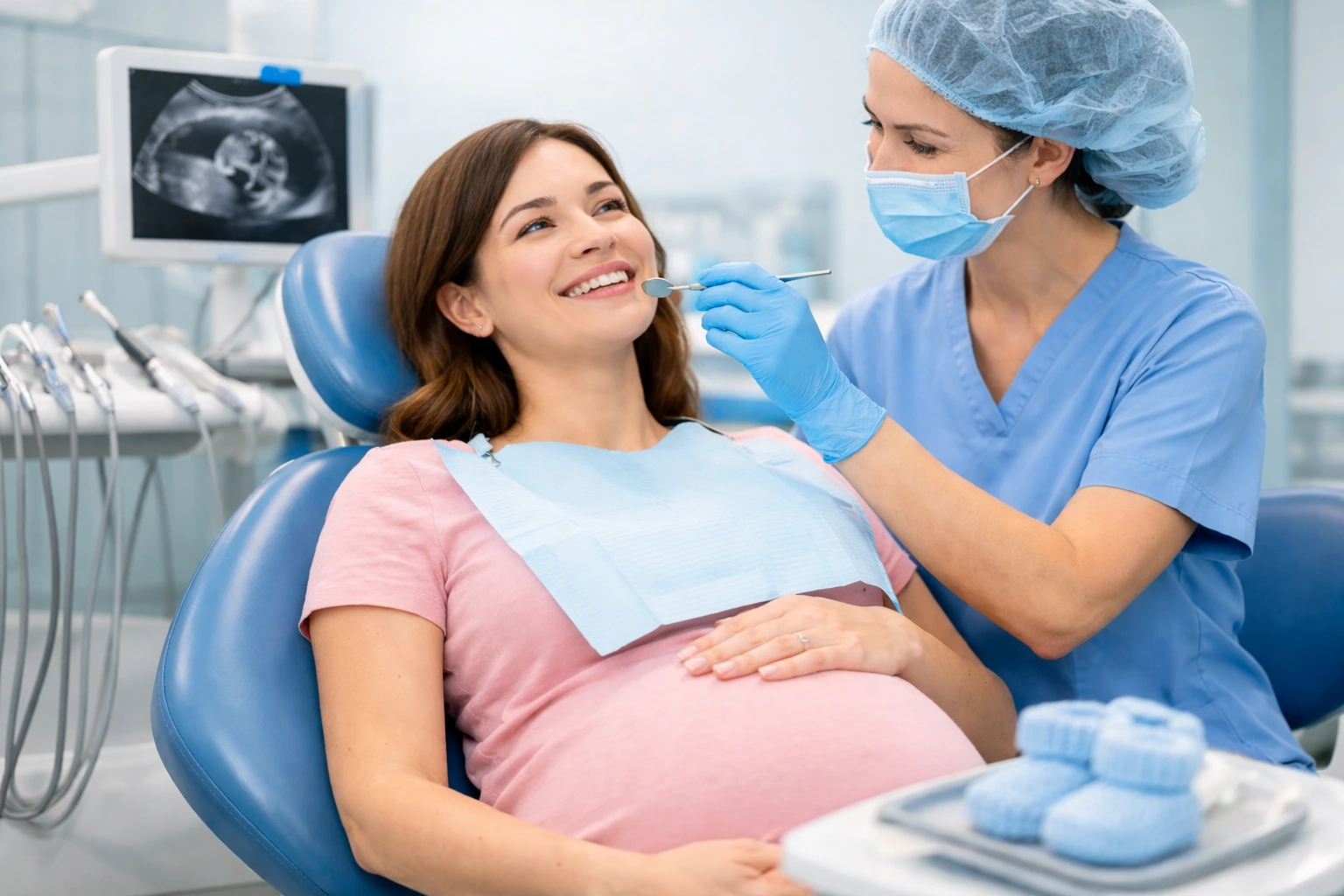
Yes, it is generally safe to see a dentist during pregnancy when a proper clinical assessment is performed. Dental care helps control inflamed gums, bleeding, sensitivity, plaque, tartar, cavities and other discomforts that can worsen if delayed. If you are looking for professional guidance, you can learn about our dental treatments and schedule a personalized assessment.
Why dental care in pregnancy should not be postponed?
During pregnancy, many women notice changes in their oral health: more sensitive gums, bleeding when brushing, inflammation, bad breath, increased plaque buildup or discomfort when chewing. The current version already covers these symptoms, but to make it an authoritative piece it is worth naming them with more clinical precision: pregnancy gingivitis, plaque buildup, tartar, active caries and tooth sensitivity.
When a pregnant patient delays her check-up out of fear, doubt or discomfort, a small problem can turn into an emergency. Therefore, the right thing to do is not to wait until the pain gets worse, but to go to a clinic that makes a clear evaluation from the beginning. If you want to understand what this process is usually like, check out what to expect at your first dental appointment.
What are the most common dental problems during pregnancy?
Pregnancy gingivitis
One of the most common findings is gingival inflammation. If your gums bleed frequently when brushing or flossing, don’t take it for granted. Recurrent bleeding is a sign that an evaluation is in order.
Dental sensitivity
Sensitivity may increase if there is frequent vomiting, reflux, changes in diet or discomfort that makes constant hygiene difficult. It may also appear if there was previous dental wear.
Bacterial plaque and tartar accumulation
When there is nausea or fatigue, some patients reduce the time or quality of brushing. This favors plaque accumulation, inflammation and caries risk.
Active caries or previous worsening pain
A small cavity can progress and cause pain if left untreated. If there is also discomfort when chewing, severe sensitivity or spontaneous pain, it is not advisable to wait. To understand when a discomfort requires prompt attention, consult toothache: frequent causes, what to do today and when it is a real emergency.
Is it safe to go to the dentist during pregnancy?
Yes, in most cases, preventive dental care and clinical assessment are safe during pregnancy when performed with clear diagnosis, planning and follow-up. The current page already states this, but in the master piece it should be higher up and with more direct language, because that is one of the main search intentions.
The important thing is not to avoid the dentist, but to go to a place where they explain clearly what is going on, what needs to be taken care of first and what steps are reasonable for your case. If you want to know how to identify a reliable clinic, check out how to evaluate a dental clinic in CDMX.
What dental treatments are usually evaluated during pregnancy?
The current version lists dental checkup, professional cleaning, periodontal follow-up and emergency care. That base is good; now it needs to be converted into a more scannable and extractable block.
| Situation | Target | When to assess with the dentist |
|---|---|---|
| Dental check-up | To detect gingivitis, caries, plaque, tartar, sensitivity or signs of infection. | When there is discomfort, bleeding or a long time without revision. |
| Professional Dental Cleaning | Control plaque and tartar and support gum health. | When there is gingival inflammation or visible tartar build-up |
| Periodontal follow-up | Monitor persistent bleeding, inflammation or progression of gum problems. | When gingivitis does not improve or periodontal history is present |
| Care for discomfort or emergencies | Resolving pain, infection, fracture or major inflammation | When pain interferes with eating, sleeping or speaking |
| Non-priority procedures | Avoid hasty decisions without a clear indication. | When there is no urgency and a complete evaluation should be made beforehand. |
What should a pregnant patient avoid?
What should be avoided is not dental care, but improvisation. It is not advisable to self-medicate, ignore persistent pain or go to places where the diagnosis and plan of care are not precisely explained. It is also best to avoid non-priority procedures without a clear prior assessment. Safety starts with a good understanding of the clinical situation.
When is the best time to go for a dental check-up?
The practical answer is simple: when discomfort appears or when you have not had a check-up for a long time. There is no need to wait for severe pain to make an appointment.
It is convenient to go if you notice:
frequent bleeding gums,
sensitivity that is increasing,
pain when chewing,
persistent bad breath,
inflammation,
history of caries and recent discomfort.
Warning signs to make an appointment as soon as possible
Bleeding gums several days per week
If bleeding recurs, you need assessment.
Dental pain that appears at times
Even if it is not constant, it may indicate a problem that is progressing.
Localized swelling or pressure sensation
It may be related to infection or an inflammatory process that needs to be checked.
Difficulty eating on one side
This usually indicates pain, tenderness or functional impairment.
Discomfort that makes you anxious or fearful of being attended to.
Fear counts too. Many patients do not attend because of the feeling that the appointment will be uncomfortable or painful. If this is your case, check fear of the dentist, anxiety and pain control.
If you are pregnant and have bleeding gums, tenderness, pain or swelling, the next right step is to schedule an evaluation.
What should an ideal clinic be like for a pregnant patient?
A pregnant patient doesn’t just need a dentist. She needs care that combines clear diagnosis, simple explanations, follow-up and an environment that inspires confidence.
That means looking for a clinic with:
well-structured evaluation,
clear protocols,
simple communication,
careful attention,
technology to aid in diagnosis.
If you want to learn how technology can improve accuracy and patient experience, check out advanced dental technology in CDMX. It may also help you to learn more about our dental team.
Pregnancy and fear of the dentist: a real barrier
Many pregnant patients do not delay consultation out of disinterest, but out of anxiety. Some are afraid of pain, others do not know if they can receive care, and still others have had unclear previous experiences.
Therefore, in this context, communication is as important as the treatment. Explaining what will be done, how long the appointment will last, what discomfort can be expected and what not, helps to reduce uncertainty. In cases where the patient is very fearful or needs to better understand management options, it may be helpful to read conscious sedation vs. local anesthesia as a general informational guide.
Daily care of teeth and gums during pregnancy
Home care remains important, especially if there are sensitive gums or a tendency to bleed.
Gentle and constant brushing
Use a soft bristle brush and maintain a delicate but thorough technique.
Daily dental floss
Helps control plaque between teeth, where the toothbrush cannot reach.
Attention to toothpaste
If the taste of the toothpaste makes you gag, it is worth adjusting the product, always aiming for an option suitable for daily use. You can use this guide on how to choose the right toothpaste.
Do not abandon professional review
Hygiene at home helps, but does not replace an assessment when there is already persistent inflammation, pain or tenderness.
What to do if there is dental pain during pregnancy?
The first thing is not to ignore it. The pain may be related to caries, inflammation, infection or even a functional problem with chewing. The correct course of action is to ask for an evaluation to identify the cause.
Although many discomforts seem minor at first, dental pain should not always be taken lightly. In some cases it may be related to infections, advanced inflammation or problems that require a more complete assessment. If you want to better understand why certain symptoms should not be ignored, we recommend reading Tooth pain: a symptom of serious diseases in the body.
Frequently asked questions about dental care in pregnancy
Is it normal for gums to bleed during pregnancy?
It is common, but should not be ignored. If bleeding is recurrent, a check-up is advisable.
Can I have my teeth cleaned if I am pregnant?
In many cases yes, as part of a preventive approach and according to professional assessment.
Should I wait until after delivery to go to the dentist?
No. Delaying the checkup can make simple problems worse.
What do I do if I have a toothache?
Ask for an assessment as soon as possible to identify the cause.
Do I need to be checked even if I have no pain?
Yes, many gum disorders or early caries do not generate pain at the beginning.
Can vomiting affect my teeth?
Yes, it can increase sensitivity and promote wear and tear if it is frequent.
Which clinic should I look for?
One that offers you clear diagnosis, follow-up, good communication and careful attention like La Clínica Dental.
What is pregnancy gingivitis?
It is the inflammation of gums associated with hormonal changes and plaque accumulation, and should be assessed if there is bleeding or discomfort.
What happens if I have tartar during pregnancy?
Tartar can cause inflammation and bleeding, so a professional check-up is advisable.
Does bacterial plaque increase in pregnancy?
It can accumulate more easily when there is nausea, fatigue or changes in the hygiene routine.
Can cavities be treated during pregnancy?
A cavity with pain or progression should be evaluated as soon as possible to avoid complications.
When does dental discomfort become an emergency?
When there is severe pain, swelling, infection, fracture or difficulty eating on one side.
How to brush if I feel nauseous?
It is convenient to use a soft bristle toothbrush, adjust schedules and check the toothpaste you are using.
How often should I check teeth and gums during pregnancy?
The frequency depends on the case, but any persistent bleeding, pain or tenderness warrants assessment.
Which treatments are best to postpone?
Non-priority procedures should be considered calmly and only after a clear diagnosis.
Do you have dental discomfort during pregnancy? Schedule an evaluation
If you have bleeding gums, sensitivity, pain or inflammation, a timely assessment can help you act with clarity and prevent complications. You can learn about our dental treatments or schedule an evaluation to receive guidance according to your case. The current page already uses both links in the closing.
Author:
Dr. Rosa María Moctezuma Lozano
National Autonomous University of Mexico
ID No. 1135288
Clinically reviewed and updated content for patient information guidance.
Last editorial revision: March 11, 2026.