Published by Dr. Rosa Ma. Montezuma : February 08, 2026.
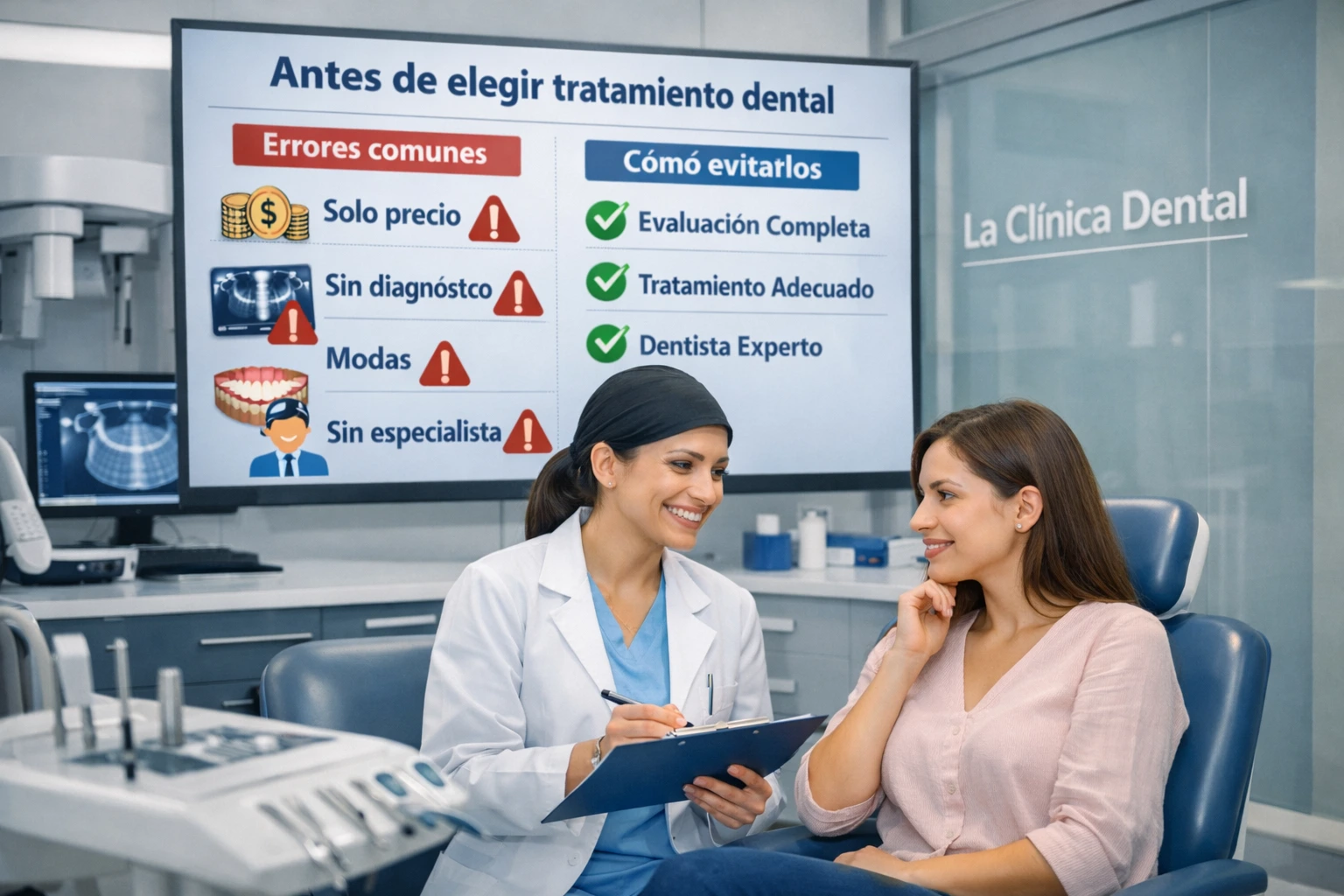
Choosing a dental treatment based solely on price, trends, or without a complete diagnosis can lead to unsatisfactory aesthetic results, expensive retreatment, and poor experiences, especially in complex procedures such as implants, All-on-4, porcelain veneers, or orthodontics. At La Clínica Dental, we explain the most common mistakes and what questions to ask before deciding, whether you live in Mexico City or are visiting for dental tourism.
Choosing solely based on price (especially for implants and All-on-4)
When it comes to dental implants, full-mouth rehabilitations, or All-on-4 / All-on-6 treatments, choosing the cheapest option often proves costly: low-quality materials, deficient planning, and a higher risk of complications.
How to avoid this
-
Compare complete treatment plans, not just the cost of “an implant.”
-
Always ask what brand of implants they use, what the surgery includes, and what type of prosthesis will be placed.
-
Be wary of offers that seem too good to be true, especially if they promise a new smile in very few appointments without clear explanations.
2. Starting without a complete digital diagnosis
Accepting treatment without X-rays, 3D scans, or clinical photographs is a serious mistake, especially in implant surgery, All-on-4, orthodontics, and even veneers.
How to avoid this
-
Demand a complete evaluation: medical history, gum examination, X-rays, and, if applicable, 3D digital planning.
-
Ask to see your case on screen: digital models, smile simulations, or surgical planning.
-
Ask what would happen if you do not undergo the recommended treatment.
At La Clínica Dental CDMX, all complex cases are planned with digital dentistry to reduce risks and surprises.
3. Not understanding the treatment (or the alternatives)
Another common mistake is saying “yes” without understanding what will be done, how long it will take, or if alternatives exist. For example:
-
Accepting multiple extractions without asking if there is an option for single implants or All-on-4.
-
Choosing porcelain veneers without first considering orthodontics or less invasive treatments.
Minimum checklist before accepting
-
What procedure does the specialist propose and why?
-
Are there more conservative or more economical alternatives?
-
How many appointments, what discomfort, and what recovery time will I have?
-
What results are realistic and in what timeframe?
4. Following trends (veneers, whitening, “Hollywood smiles”)
Social media is full of “transformations” with porcelain veneers, composite resins, or very aggressive whitening treatments. The mistake is asking for exactly what you saw without evaluating if it is the best option for your mouth.
How to avoid this
-
Use social media as inspiration, not as a prescription.
-
Ask if your teeth and gums are ready for veneers or if you first need orthodontics or periodontal treatment.
-
Choose a shade of white that matches your skin tone and age; a smile that is too white can look artificial.
5. Not valuing the team’s experience and specialties
The same treatment (for example, All-on-4, multiple implants, or invisible orthodontics) can have very different results depending on the team’s experience and available technology.
Positive signs
-
Differentiated specialists: implantologist, orthodontist, prosthodontist, pediatric dentist.
-
Use of digital technology: intraoral scanner, 3D CT scan, guided planning.
-
Documented clinical cases similar to yours, especially in full-mouth rehabilitations and dental tourism.
6. Not considering your lifestyle and place of residence
A plan can be technically perfect but fail if it doesn’t adapt to your life:
-
Clear aligners for patients who know they won’t wear them 22 hours a day.
-
Complex multi-phase treatments for patients traveling from another country without sufficient time to stay in Mexico City.
-
Extensive rehabilitations for patients with uncontrolled bruxism.
Recommendation
Be honest about your time, habits, and place of residence. If you are coming for dental tourism to Mexico City, ask how many trips you will need and what part of the treatment can be done in your home country.
7. Not asking about maintenance, duration, and guarantees
The mistake: thinking that once the treatment is finished, there is nothing more to do.
-
Veneers and prosthetics require periodic check-ups.
-
Implants and All-on-4 need specific controls and cleanings.
-
Orthodontics require lifelong retainers.
Key questions
-
What maintenance does my treatment require?
-
How often should I come for a check-up if I live outside Mexico?
-
What does the warranty cover and for how long?
8. Common mistakes among dental tourism patients
If you travel to Mexico City for treatment, additional mistakes can arise:
-
Not allowing enough days for tests, surgery, and follow-ups.
-
Choosing solely based on price without reviewing safety and sterilization protocols.
-
Not confirming if the clinic offers online follow-up once you return home.
How to avoid them
-
Request an estimated itinerary with the number of days and appointments.
-
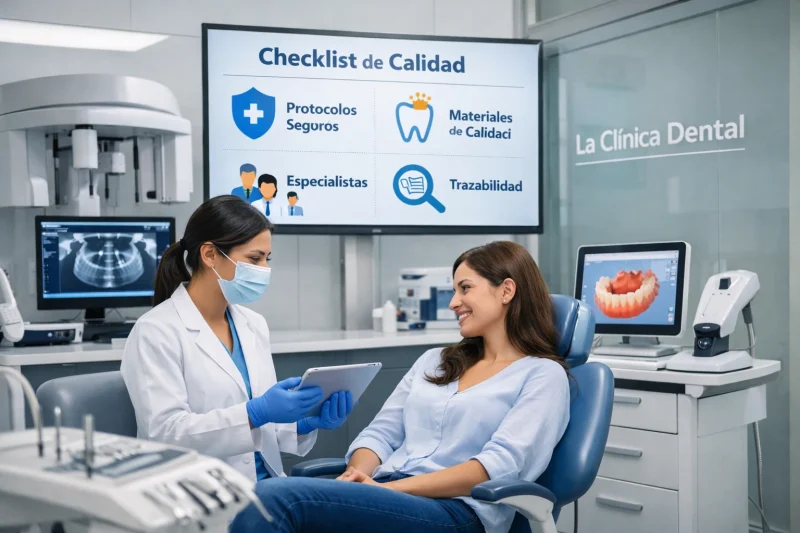
Ask about certifications, biosafety protocols, and material brands.
-
Ensure there is a contact channel (WhatsApp, video call) to resolve questions afterward.
Frequently Asked Questions about How to evaluate a dental clinic in Mexico City
What are the most common mistakes when choosing dental treatment?
The most common ones include deciding solely based on price, starting without a complete diagnosis, not understanding the treatment plan, being swayed by trends (such as veneers or extreme whitening treatments), and not inquiring about maintenance and warranties. In complex cases like implants or All-on-4, these errors can necessitate redoing the entire case.
What should I ask before getting dental implants or All-on-4?
Ask which studies are required (3D CT scan, digital scanner), which brand of implants they use, how many appointments are needed, what type of prosthesis you will receive, how long the provisional teeth phase will last, what maintenance is required, and what the warranty covers if something loosens or breaks.
How to choose between porcelain veneers, resin, or orthodontics?
It depends on the condition of your teeth, their position, and wear. Porcelain veneers are more durable and aesthetic but require preparation; resin is more affordable and conservative; orthodontics corrects position. The correct approach is to evaluate your case with a diagnosis and weigh the pros and cons of each option.
Is it safe to travel to Mexico City for dental treatment?
Yes, as long as you choose a clinic with strict biosafety protocols, certified specialists, and clear planning. Request an appointment itinerary, get to know your doctors’ names, review cases from other international patients, and confirm that you will have online follow-up after returning to your country.
How can I compare the cost of dental implants between Mexico and my home country?
Compare complete packages, not just the price per unit: studies, surgery, abutments, prosthetics, check-ups, and potential adjustments. Also consider flights and accommodation. Even so, many patients report significant savings by coming to CDMX for materials from renowned brands.
What is digital dentistry and how does it improve my treatment?
It is the use of intraoral scanners, 3D X-rays, and planning software to design your treatment before touching a tooth. It allows for greater precision in implants, orthodontics, veneers, and full-mouth rehabilitations, reduces errors, and makes it easier for the patient to understand the plan.
How do I know if a dental clinic is reliable for a complex case?
It should show you previous studies, explain the plan in writing, introduce the specialist in charge, show cases similar to yours, detail material brands and safety protocols, and have good reviews and verified testimonials.
What happens if I do not follow the maintenance recommendations after treatment?
The results may be compromised: veneers can fracture, implant prosthetics can loosen, gums can become inflamed, or teeth can shift again after orthodontics. This is why periodic check-ups, professional cleanings, and the use of splints or retainers are essential when indicated by the specialist.
Does La Clínica Dental CDMX treat both local and international patients?
Yes. We treat patients living in Mexico City as well as people traveling from other countries for dental tourism. We adapt treatment plans to the length of stay, offer complete digital diagnostics, and maintain remote communication for follow-up care.
The most common ones include deciding solely based on price, starting without a complete diagnosis, not understanding the treatment plan, being swayed by trends (such as veneers or extreme whitening treatments), and not inquiring about maintenance and warranties. In complex cases like implants or All-on-4, these errors can necessitate redoing the entire case.
Ask which studies are required (3D CT scan, digital scanner), which brand of implants they use, how many appointments are needed, what type of prosthesis you will receive, how long the provisional teeth phase will last, what maintenance is required, and what the warranty covers if something loosens or breaks.
It depends on the condition of your teeth, their position, and wear. Porcelain veneers are more durable and aesthetic but require preparation; resin is more affordable and conservative; orthodontics corrects position. The correct approach is to evaluate your case with a diagnosis and weigh the pros and cons of each option.
Yes, as long as you choose a clinic with strict biosafety protocols, certified specialists, and clear planning. Request an appointment itinerary, get to know your doctors’ names, review cases from other international patients, and confirm that you will have online follow-up after returning to your country.
Compare complete packages, not just the price per unit: studies, surgery, abutments, prosthetics, check-ups, and potential adjustments. Also consider flights and accommodation. Even so, many patients report significant savings by coming to CDMX for materials from renowned brands.
It is the use of intraoral scanners, 3D X-rays, and planning software to design your treatment before touching a tooth. It allows for greater precision in implants, orthodontics, veneers, and full-mouth rehabilitations, reduces errors, and makes it easier for the patient to understand the plan.
It should show you previous studies, explain the plan in writing, introduce the specialist in charge, show cases similar to yours, detail material brands and safety protocols, and have good reviews and verified testimonials.
The results may be compromised: veneers can fracture, implant prosthetics can loosen, gums can become inflamed, or teeth can shift again after orthodontics. This is why periodic check-ups, professional cleanings, and the use of splints or retainers are essential when indicated by the specialist.
Yes. We treat patients living in Mexico City as well as people traveling from other countries for dental tourism. We adapt treatment plans to the length of stay, offer complete digital diagnostics, and maintain remote communication for follow-up care.
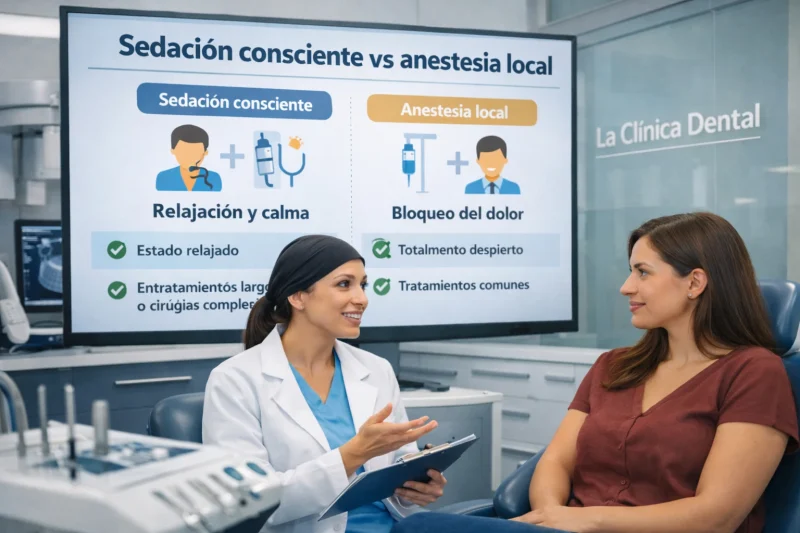
Look for clinics that mention conscious sedation, “pain-free” protocols, and anxiety management as part of their services—not just as a footnote.
Ask if they can give you more time during your appointment, provide step-by-step explanations, and offer sedation when necessary.
At least: complete medical history, exploration, X-ray or tomography if the case warrants it, explanation of options, and a phased plan (not just “a budget”).
No. A clinic may be perceived as “expensive” if it only communicates the price and not the value: technology, a multidisciplinary team, fewer retreatments, and financing options.
The ideal is a premium yet affordable model.
Check to see if the practice offers pediatric dentistry, a child-friendly environment, preventive care programs, and flexible hours.
Reviews should mention positive experiences from families, not just from adults undergoing cosmetic treatments.
A lot, especially if you need implants, complete rehabilitation, or smile design. Coordination between specialties in the same place reduces errors, times, and stress.
It must have information in Spanish and English, explain treatment times, offer basic logistical help (hotel recommendation, transfers), and show reviews from international patients.
Yes. It is your right to have access to your X-rays, tomographies, photos, and written plan. A clinic that takes care of traceability usually delivers them without problem, sometimes even digitally.
If the budget is very high and you do not understand why, if the plan seems excessive, or if not enough studies were done. Some comprehensive clinics offer “comprehensive evaluation” and second opinion as a formal service.
Not necessarily. Many premium clinics focus on planned and complex treatments, not on early morning emergencies. The important thing is that they clearly tell you what emergencies they do attend to and at what times.
At least once a year, review:
- If they continue to update themselves in technology.
- If they maintain reasonable appointment times.
- If they continue to explain options and costs with the same clarity.
Are you unsure which dental treatment is right for you?
Schedule a consultation at La Clínica Dental CDMX, and we’ll review your case with a comprehensive digital diagnosis, clear options, and a written estimate—whether you live in Mexico City or are visiting from abroad.
Take the first step today and avoid mistakes before starting your treatment.
Author:
Dr. Rosa María Moctezuma Lozano
National Autonomous University of Mexico
License N° 1135288