Published by Dr. Rosa Ma. Moctezuma, Cédula No. 1135288: December 11, 2025.
Last update of this article: March 18, 2026. by Dr. Juan Carlos V
Dental implants are a fixed solution to replace missing teeth when there is an adequate diagnosis of the bone, gums and bite. Their objective is not only to improve esthetics: they seek to recover chewing function, stability and comfort in the long term by means of a crown, a bridge or a prosthesis supported on an artificial root.
Not all patients need the same treatment. In some cases a single implant is sufficient; in others, grafting, a complete fixed rehabilitation or more precise digital planning should be considered. Therefore, the right decision starts with diagnosis, not with price or quick promises.
What are dental implants and how do they work?
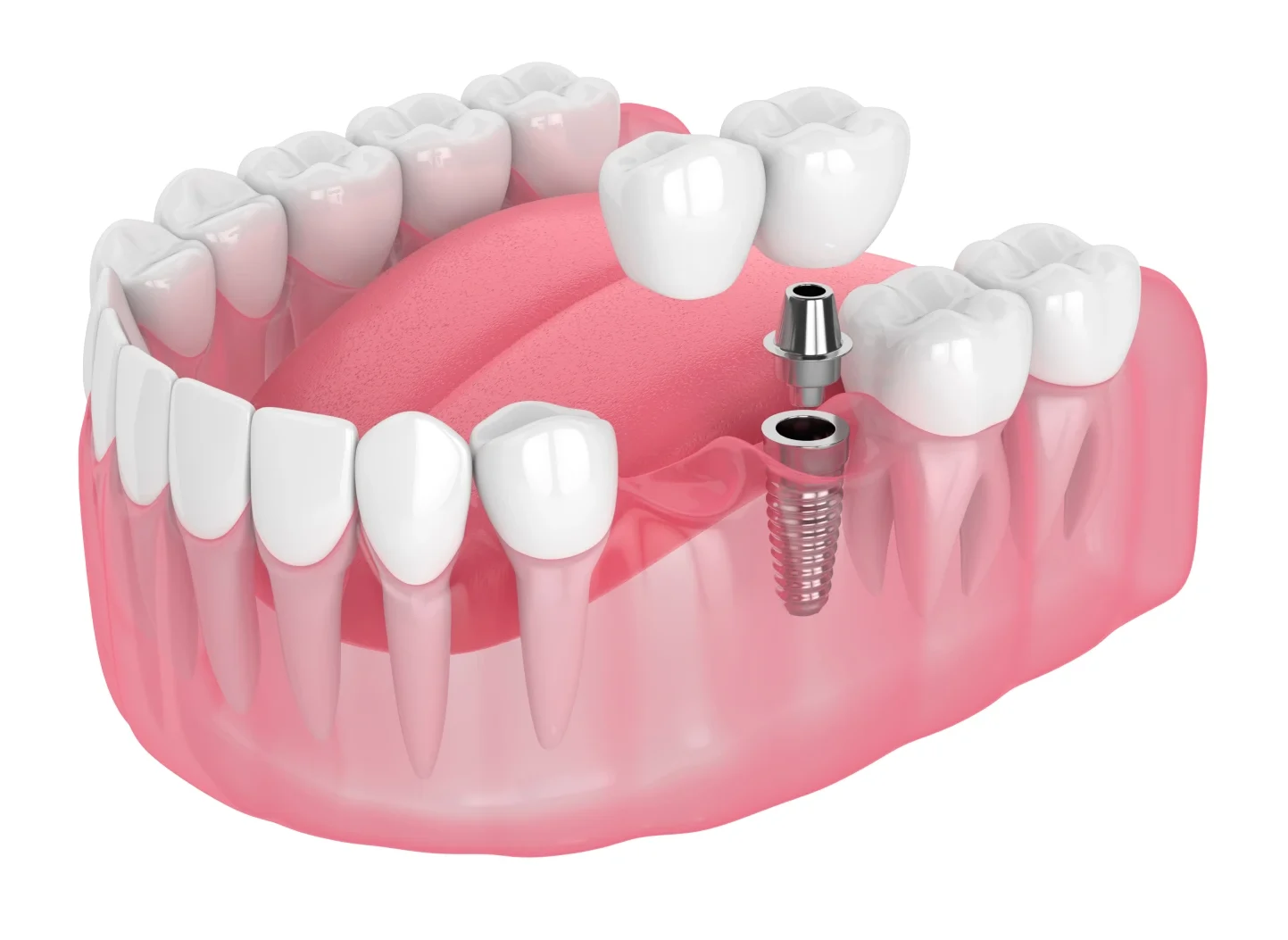
A dental implant is an artificial root that is placed in the maxillary or mandibular bone to support a fixed restoration. That restoration can be a crown for a single tooth, a bridge for several teeth or a complete fixed prosthesis in larger cases.
The key idea is this: the implant replaces the root; the restoration replaces the visible part of the tooth. That is why the treatment does not depend on a single piece, but on a correct diagnosis, sufficient bone support, good periodontal health and a restorative design that withstands the chewing load.
Therefore, talking about implants is not talking about a single screw. It is about diagnosis, surgery, rehabilitation and long-term follow-up. When these stages are well coordinated, the result can be stable, functional and comfortable for the patient.

In which cases are dental implants recommended?
Implantology is recommended in situations such as:
- Tooth loss due to periodontal disease or advanced caries.
- Teeth lost due to trauma or accidents.
- Congenital absence of some dental pieces.
- Patients with uncomfortable removable prostheses who are looking for a more fixed and stable option.
- Spaces where a tooth was extracted long ago and not replaced.
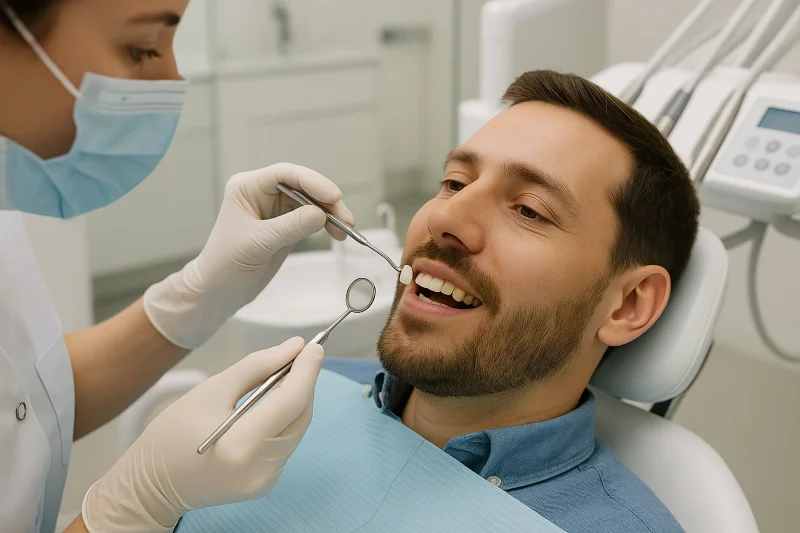
In an initial assessment at La Clínica Dental we review your medical history, the condition of your gums, the quality and quantity of bone available and your expectations to determine if dental implants are the best option for you or if other treatments should be considered.
If you want to learn more about this topic, we recommend the following articles:
- complex cases with bone loss, grafting, All-on-4 and elderly patients
- what to expect at your first dental appointment
- how to evaluate a dental clinic in CDMX
Who is a candidate for dental implants?
A patient may be a candidate when he/she has lost one or more teeth and there is a sufficient basis to rehabilitate the area safely. To define it, it is not enough to see the space: it is necessary to study the available bone, gums, bite, habits such as bruxism and medical history that may affect healing.
In many cases it is possible to place implants, but not always immediately. Some patients first need to control inflammation, improve hygiene, treat gums or digitally plan the case before going into surgery.
If you are in the evaluation stage, it is a good idea to first review what happens at a first dental appointment for implants, because this is where it is defined whether the case can be solved directly or if it needs prior preparation.
What we check before placing an implant
Before proposing a dental implant, the right thing to do is to confirm five clinical points:
-
if there is sufficient bone to provide support,
-
if the gum is healthy and free of inflammation,
-
if the bite distributes the chewing force well,
-
if there are habits that increase the risk of overload,
-
and whether the patient needs a single crown, a bridge or a more extensive rehabilitation.
This analysis avoids hasty decisions and allows you to choose a treatment that not only looks good, but also works in the long term.
When is it necessary to prepare the mouth before the implant?
There are patients who can receive the implant after the initial diagnosis and others who first need to stabilize the gum, improve hygiene, control the bite or better study the anatomy with digital support. That doesn’t mean the case is bad; it means it needs a smarter plan.
Therefore, when there are doubts about bone, position or surgical safety, it makes sense to rely on techniques such as computer-guided implants or advanced dental technology resources in CDMX, which help to plan more accurately.
When is it not convenient to place implants immediately?
It is not appropriate to proceed immediately when the gingiva is inflamed, there is bone loss that requires further study, the bite is overloaded, there is uncontrolled bruxism, or the patient needs to stabilize overall oral health first.
This does not mean that the case has no solution. It means that the treatment should be designed in stages to increase safety, stability and long-term prognosis. In implant dentistry, rushing is usually more costly than diagnosing well from the beginning.
Types of implants and solutions that can be offered
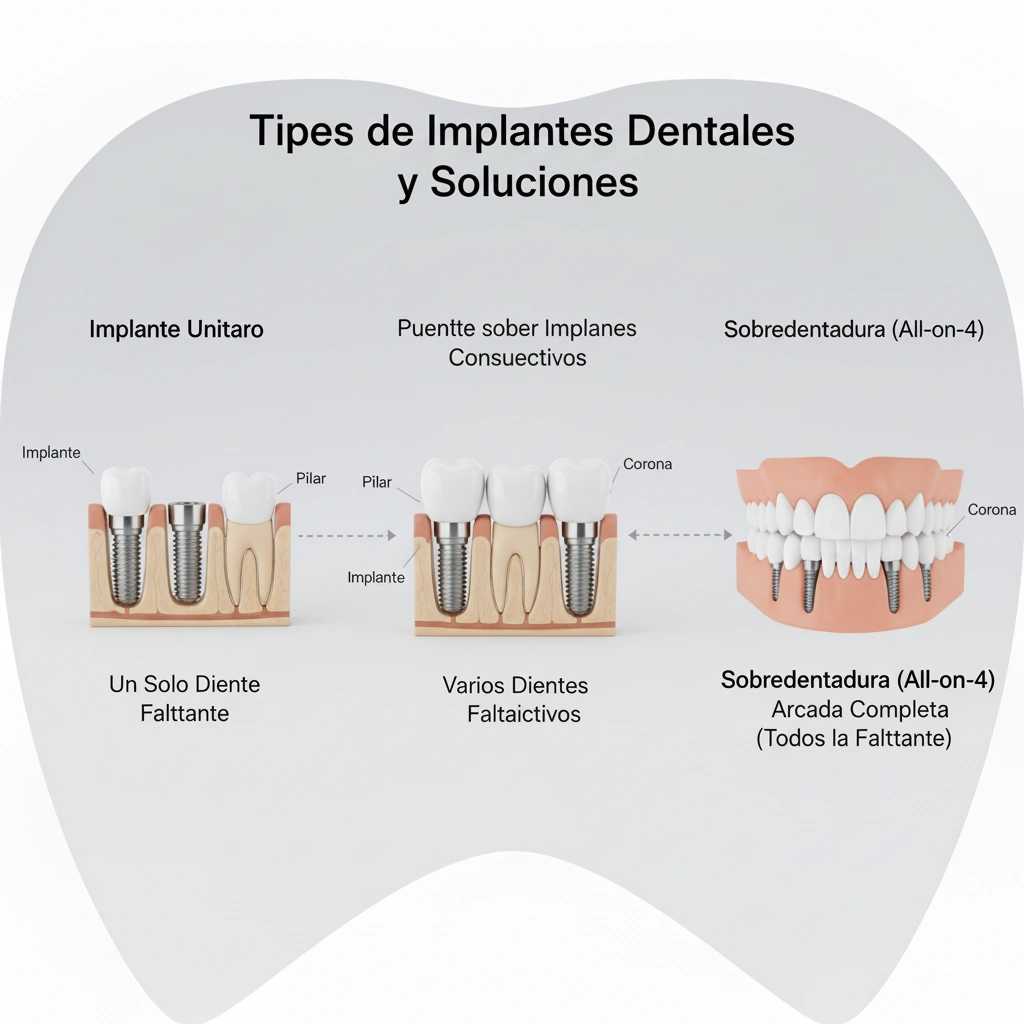
Depending on each case, dental implants can be used for:
- Replace a single tooth with an implant and a single crown.
- Replace several teeth in a row, placing two or more implants supporting a fixed bridge.
- Rehabilitate complete arches, using several implants strategically distributed to support fixed prostheses or overdentures (prostheses that are “anchored” on implants).
Therefore, treatment should always be tailored to the number of missing teeth, the quality of the bone and the patient’s functional and esthetic goals. In some cases, the best option may be a complete fixed rehabilitation such as All-on-4 and All-on-6 in CDMX, while in others a more comprehensive approach within a comprehensive dental treatment in CDMX is appropriate.
What is the difference between an implant, a bridge and a removable prosthesis?
Not all solutions are suitable for all patients. Making the right choice depends not only on the initial budget, but also on how much support is left in the mouth, the condition of the neighboring teeth and the actual goal of the treatment. A patient may want to “replace a tooth,” but clinically the right decision changes if there is also wear, bone loss or tooth mobility.
The implant is usually the most complete option when a fixed, independent rehabilitation is sought, designed to restore chewing function without compromising neighboring teeth. Even so, comparing alternatives with medical criteria is the best way to avoid mistakes.
| Option | What does it replace? | Main advantage | Main limitation | When is it usually indicated? |
|---|---|---|---|---|
| Dental implant | Root and missing tooth by means of a fixed restoration | Allows a stable solution without wearing down neighboring teeth | Requires bone diagnosis, planning and surgery | When sufficient bone exists or can be restored with an adequate plan |
| Dental bridge | The space of the missing tooth supported by adjacent teeth. | Can solve the gap without implant placement | Forces to prepare neighboring teeth | When the supporting teeth already need crowns or the case cannot be solved with implants. |
| Removable prosthesis | One or more missing teeth | Lower initial investment in some cases | Reduced stability, comfort and chewing strength | When a removable, provisional solution is sought or the case does not allow any other immediate option. |
When the goal is to regain chewing function with a fixed and independent solution, the implant usually offers the most complete logic. Even so, the right decision should be made on a case-by-case basis and not based on commercial preference.
When the dental implant usually stands out
The implant stands out especially when the objective is to recover comfort, stability and a sensation closer to natural teeth. It is also a valuable alternative when you want to avoid the wear of healthy teeth or when the patient wants a fixed solution with a clear maintenance plan.
If the tooth loss affects more than one area or compromises the entire bite, it is appropriate to extend the evaluation with more advanced rehabilitation options, such as All-on-4 or All-on-6, depending on the number of missing teeth and the condition of the bone.
What is the dental implant procedure like at La Clínica Dental?
Although each treatment is tailored to the individual patient’s situation, the process usually follows these stages:
Assessment and planning
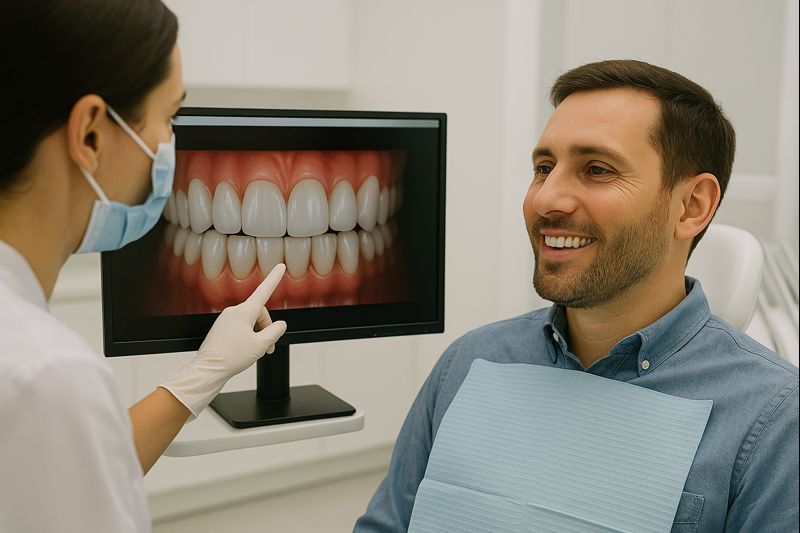
This phase is one of the most important. Here, not only is it reviewed whether you are a candidate, but also how the case should be designed, what type of restoration is appropriate, how much bone is available and whether additional procedures are required before the implant is placed. A good diagnosis avoids improvisations and allows safer decisions to be made from the beginning.
It is also the stage in which the bite, the ideal position of the implant and the type of prosthesis to be placed afterwards are assessed. To better understand how this evaluation takes place, you can review: what to expect at your first dental appointment and advanced dental technology in CDMX.
In the first appointment we performed:
- Detailed medical history.
- Exploration of your mouth, gums and occlusion (way of biting).
- Imaging studies (radiographs, tomography) to evaluate the bone.
With this information, our specialists design a personalized treatment plan, choosing the number of implants, their ideal position and the type of prosthesis to be placed.
2. Implant placement
Once the plan is defined, the implant is placed by a surgical procedure under local anesthesia. When the case is well studied and planned, this phase is usually well tolerated. Subsequent discomfort can usually be controlled with medication and care indicated by the specialist.
Implant placement should not be viewed as an isolated surgery, but as a precise part of a comprehensive treatment. In many cases, computer-guided implant support helps to execute the plan more accurately. If the patient has concerns about pain control or anxiety, further information can be found in conscious sedation vs. local anesthesia.
3. Prosthetic phase (crown, bridge or prosthesis)
After placement, the implant needs a period of osseointegration to bond with the bone in a stable manner. Once the implant is well integrated, models are taken to fabricate the crown or prosthesis that will be fixed on it. This piece is designed so that:
- Look as natural as possible.
- Respect the shape and size of your other teeth.
- Allow for good chewing and speaking function.
This stage should not be understood only as the esthetic part of the treatment. The final restoration must also respect function, comfort, future hygiene and harmony with the rest of the smile. Therefore, a well-resolved prosthetic phase improves not only the appearance, but also the way of speaking, chewing and smiling with confidence.
How long does dental implant treatment take?
The dental implant procedure does not start at surgery. It starts at diagnosis. First, bone, gums, bite and the type of rehabilitation the patient needs are studied. Then it is defined if the case can be solved directly or if it requires previous preparation, such as periodontal control, grafting or advanced digital planning.
Once the plan is approved, the implant is placed, the integration phase is awaited and finally the definitive restoration is designed. In more complex cases, times may change depending on the quality of the bone, the number of pieces and the stability achieved at each stage.
| Stage | What occurs | Clinical objective |
|---|---|---|
| Evaluation and diagnosis | Bone, gums, bite, imaging studies and restorative needs are studied. | Design a safe and personalized plan |
| Implant placement | The artificial root is inserted in the planned position. | Achieving a stable base for the future restoration |
| Integration and healing | The implant is integrated into the bone and healing is controlled. | Promote biological stability and prognosis |
| Final restoration | The crown, bridge or definitive prosthesis is placed. | Restore function, support and esthetics |
| Maintenance | Check hygiene, gingiva, occlusal fit and condition of the restoration. | Protect the treatment in the long term |
What are the risks of dental implants and how can they be reduced?
Talking about implants seriously implies explaining benefits and also limits. A well-planned implant can offer a very stable and functional solution, but no treatment should be presented as automatic or risk-free. Safety depends on the diagnosis, surgical technique, gum control, follow-up and patient behavior during recovery.
The important thing is not to scare the patient, but to give an honest explanation: when the case is well studied, many problems can be prevented before they appear.
Complications that must be clearly explained
Factors that may affect prognosis include persistent inflammation, infection around the implant, insufficient bone integration, bruxing overload or a final restoration that does not distribute chewing force well. In some patients, the real problem is not the surgery itself, but initiating treatment without first monitoring periodontal health or planning the implant position correctly.
How to reduce risk from the outset
The best prevention does not start with the scalpel, but with the study of the case. That is why a clinic that works with criteria does not only “place implants”: it analyzes the bone, checks the gums, studies the bite, evaluates the medical history and decides whether to use computer-guided surgery or digital diagnostic tools to increase precision and predictability.
It is also advisable to explain to the patient how the subsequent follow-up will be, because the success of the implant does not end on the day of surgery.
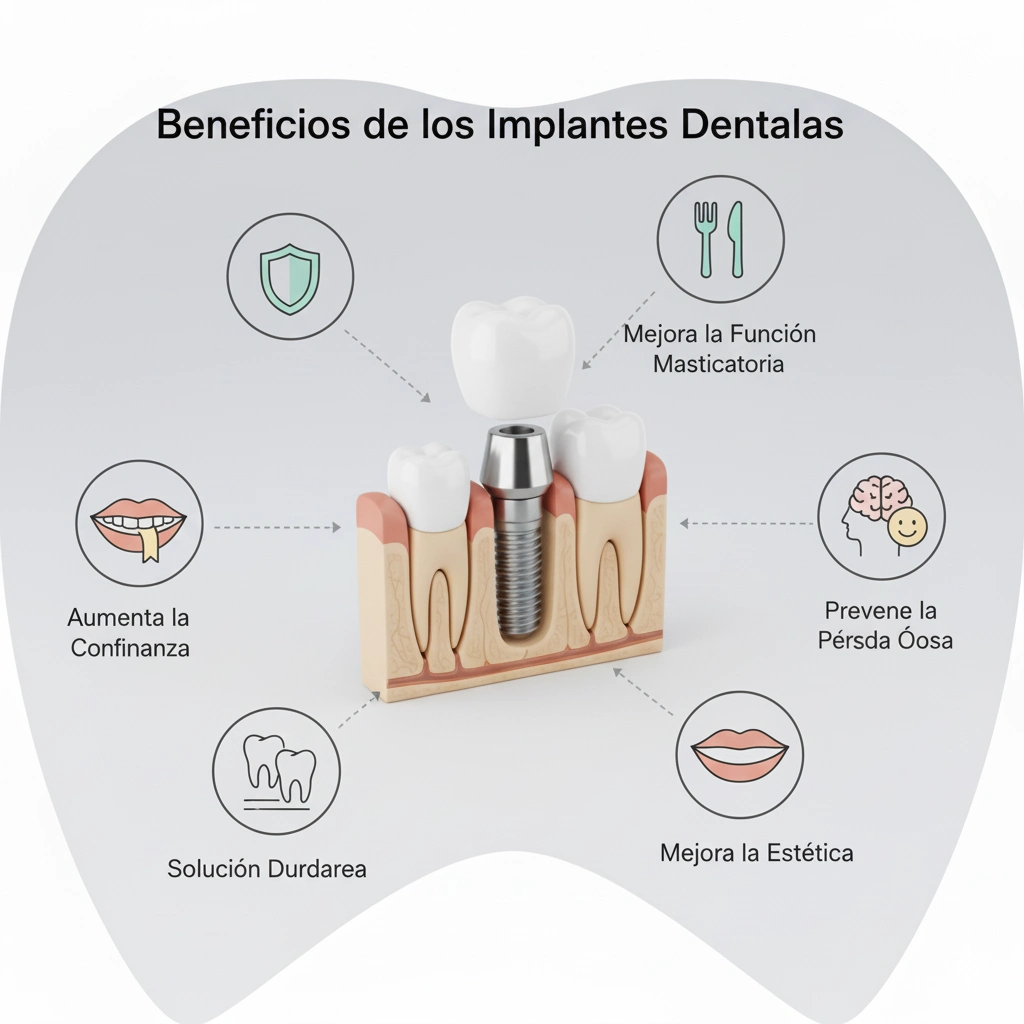
Advantages of having dental implants in CDMX with La Clínica Dental
Choosing where to place implants is an important decision because a well-resolved treatment depends on diagnosis, clinical experience, technology, materials and follow-up. At La Clínica Dental, each case is studied with clinical criteria to build a solution that makes sense for function, esthetics and long-term maintenance.
This involves working with diagnostic and planning tools such as those we show in advanced dental technology in CDMX, integrating the treatment within a broader vision when the patient requires it, as in a comprehensive dental treatment in CDMX, and offering clear information to make decisions with greater security, as we explain in how to evaluate a dental clinic in CDMX.
How long do dental implants last and how to care for them?
Well planned and well maintained, dental implants can have a long service life. Their duration depends on factors such as:
- Your oral hygiene habits.
- Control of diseases such as periodontitis.
- Smoking (which can have a negative effect).
- Whether or not to attend your periodic check-ups.
To take care of your implants we recommend:
- Maintain rigorous hygiene: brushing and interproximal cleaning around the implant.
- Go to your professional cleanings and check-ups, where the specialist will check gums, prosthesis adjustment and general condition.
- Avoid habits such as biting ice, opening objects with the teeth or excessive jaw clenching.
- Control risk factors such as smoking or poor hygiene, which may predispose to peri-implantitis (inflammation around the implant).
With proper revisions, your implants can accompany you for many years as a functional and esthetic solution.
In some cases, a nighttime bite splint may be recommended for patients with bruxism. For more information, please see our guide to the care and maintenance of dental implants and All-on-4/All-on-6 fixed prostheses. If fear or anxiety causes a patient to delay important checkups, it may also be helpful to read “Fear of the Dentist, Anxiety, and Pain Management.”
What does the price of a dental implant in CDMX depend on?
The price of a dental implant in CDMX does not depend only on the screw or a base figure. It changes according to the number of pieces to rehabilitate, the need for grafts, the type of restoration, diagnostic studies, surgical complexity and the necessary follow-up.
That is why comparing only by “price per implant” can be misleading. What is important is to know what the complete plan includes, what technology is used and whether the case requires a single-unit solution, an implant-supported bridge or a full-arch rehabilitation.
If you want to review factors, ranges and what a serious estimate usually includes, check out our guide on dental implants price in CDMX.
What makes a dental implant last for many years?
The longevity of an implant does not depend on the material alone. It depends on a complete chain of clinical decisions: correct diagnosis, healthy gums, control of biting forces, well-designed restoration and constant maintenance. An implant can function for many years, but the prognosis improves when the patient understands that stability is not self-preserving.
Factors that most influence the duration of treatment
Implants generally have a better prognosis when the gums are stable, the patient maintains proper oral hygiene, attends regular checkups, and the restoration is designed to properly support the chewing load. When this is combined with professional follow-up care and early detection of signs of inflammation or wear, the treatment becomes much more predictable. For more information, read our guide to dental implant maintenance and care.
Restoring chewing function is not just about replacing a tooth.
A well indicated implant does not only seek to fill a space. It seeks to restore stability, improve the way of chewing, protect the balance of the bite and offer a solution consistent with the patient’s complete oral health. That is the difference between an improvised treatment and a really well thought-out rehabilitation.
If you have lost one or more teeth and want to know which option makes the most sense in your case, it is most useful to start with a complete clinical assessment. From there you can define whether an individual implant, a full-arch solution or more advanced planning with digital support is appropriate.
Why trust this guide to dental implants?
This guide was written with an informative approach to help patients seeking to understand what dental implants are, who is a candidate, what risks exist and what factors influence treatment.
Content editorially reviewed by La Clínica Dental team and validated with clinical criteria oriented to diagnosis, chewing function, periodontal health and oral rehabilitation.
For cases of implantology, periodontics, bone loss or complete fixed rehabilitation, the correct indication should always be confirmed in consultation, with clinical examination, imaging studies and personalized treatment plan.
Frequently asked questions about dental implants in cdmx
Does the dental implant procedure hurt?
The implant placement is performed under local anesthesia, so during the procedure you should not feel pain. Afterwards there may be controllable discomfort or swelling, depending on the number of implants and the complexity of the case. When the treatment is well planned, this discomfort is usually managed with postoperative indications and medications prescribed by the specialist.
What should I check in an implant quotation before comparing it with another clinic?
Before comparing an implant quotation with another clinic, it is advisable to check what the treatment plan actually includes. It is not enough to see a final figure: it is necessary to confirm if it includes imaging studies, diagnosis, surgery, attachments, crown or prosthesis, subsequent controls and if there is a possibility of requiring additional procedures depending on the case. A useful comparison is not just based on «how much it costs», but on understanding what you are getting, how the treatment was planned and what follow-up you will have. If you want to review ranges, factors and what is usually included in an implant treatment, consult our guide on dental implants prices in CDMX.
How do I know if I am a candidate for dental implants?
The only way to know clearly is through a clinical evaluation and imaging studies. It is necessary to check the quantity and quality of bone, the state of the gums, the bite, medical history and if there are conditions that require a previous preparation phase.
Implants cannot be placed immediately in all cases. It is necessary to evaluate:
- Bone quantity and quality.
- Condition of the gums.
- Presence of active infections.
- General medical conditions.
In some cases, previous treatment is required, such as deep cleanings, extraction of root debris or bone regeneration procedures.
Do dental implants look like natural teeth?
Yes, one of the main objectives is that the crown or prosthesis placed on the implant has a natural look, in harmony with the rest of your teeth and your facial features. To achieve this, we select the shape, size and color in a personalized way.
Are dental implants in CDMX a good option to recover function and smile?
Yes, dental implants are one of the most stable options to replace missing teeth when the case is well studied and the treatment is adapted to the patient. Its objective is not only to improve esthetics, but also to restore support, chewing function and comfort when speaking.
What if I have bone loss and want implants?
Having bone loss does not automatically mean that you cannot have implants. It means that the case must be planned in more detail and that, in some patients, a graft or an additional procedure may be necessary before the final phase. If you want to expand on this part, you can read complex cases with bone loss, grafting, All-on-4 and older patients.
What is the difference between a single implant and a complete rehabilitation?
A single implant replaces a single piece. A complete rehabilitation is considered when several pieces are missing or when an entire arch needs to regain support, bite and stability. In these cases, the treatment logic changes and options such as All-on-4 and All-on-6 in CDMX or comprehensive dental treatment in CDMX can be considered. The report precisely identifies advanced implantology, All-on-4/6 and complete oral rehabilitation as one of the most valuable territories for the brand.
What technology is used to plan dental implants more accurately?
Current dental implant planning can be supported by 3D tomography, digital radiographs, intraoral scanning and computer-guided surgery. These tools make it possible to better study the quantity and quality of the bone, define the ideal implant position and design a more precise treatment from the outset.
At La Clínica Dental, this approach is part of a more complete digital dentistry, where the diagnosis is not only based on a visual review, but on studies that help to make decisions with greater clarity. You can learn more about advanced dental technology in CDMX and computer-guided implants.
What is digital technology used for in implant treatment?
Digital technology helps to study the bone better, plan the implant position more accurately and design the treatment more clearly from the start. Tools such as 3D tomography, intraoral scanning and computer-guided surgery help reduce uncertainty and make more accurate decisions at every stage.
For the patient, this translates into benefits that are easier to understand: less fear, fewer unnecessary visits, a clearer plan and fewer surprises during the process. If you want to learn more about how this approach is applied, you can read advanced dental technology in CDMX and computer guided implants.
How long does a dental implant treatment take?
It depends on the number of pieces to rehabilitate, the quality of the bone, whether grafts are needed and the type of final restoration. There are more direct cases and others that require several stages. The important thing is that the patient receives a clear plan with approximate times from the initial assessment.
How to know if an implant clinic in CDMX really has experience?
It is not enough to look at the price. The right thing to do is to check diagnosis, technology, clinical experience, clarity in the plan, materials, follow-up and ability to solve complex cases. The Dental Clinic is characterized for being a premium dental clinic with a lot of experience in dental implants, it is one of the best, with highly qualified professionals.
You can learn more about how to evaluate a dental clinic in CDMX.
What should I review before accepting an implant plan?
Before accepting an implant plan, review what the treatment includes, what studies will be performed, if the final crown or prosthesis is contemplated, if there is a possibility of requiring grafts or other previous phases, how long the process will take and what follow-up there will be afterwards. It is also important to understand how the diagnosis was defined and why the plan is appropriate for your case.
Is the Dental Clinic a good option if I need several implants or a complete rehabilitation?
Yes, especially when the case requires planning, digital diagnostics and a broader approach than replacing a single part.
Does advanced technology make treatment more reliable?
Yes, because it helps to make better informed decisions from the outset.
Do dental implants look natural?
Yes, when the case is well planned and the final restoration is designed according to the shape of the smile, the bite and the rest of the teeth. The goal is not only to fill a space, but to achieve a functional and visually harmonious solution.
What materials are used in implants, crowns or prostheses?
This depends on the clinical case and the final rehabilitation design.
The Dental Clinic works with the following brands, guaranteeing excellent materials for implants, crowns or prostheses:
-
3M
-
Straumann
-
CEREC
-
Ivoclar Vivadent
-
Invisalign
-
3Shape
If I have bruxism, can’t I have implants?
Not necessarily. Bruxism does not always prevent treatment, but it does make it necessary to better plan the distribution of forces and subsequent maintenance.
What if I have been without a tooth for years?
With the passage of time there may be changes in the bone and in the position of nearby teeth. Even so, many cases can be treated with good clinical planning.
The implant placement is performed under local anesthesia, so during the procedure you should not feel pain. Afterwards there may be controllable discomfort or swelling, depending on the number of implants and the complexity of the case. When the treatment is well planned, this discomfort is usually managed with postoperative indications and medications prescribed by the specialist.
Before comparing an implant quotation with another clinic, it is advisable to check what the treatment plan actually includes. It is not enough to see a final figure: it is necessary to confirm if it includes imaging studies, diagnosis, surgery, attachments, crown or prosthesis, subsequent controls and if there is a possibility of requiring additional procedures depending on the case. A useful comparison is not just based on “how much it costs”, but on understanding what you are getting, how the treatment was planned and what follow-up you will have. If you want to review ranges, factors and what is usually included in an implant treatment, consult our guide on dental implants prices in CDMX.
The only way to know clearly is through a clinical evaluation and imaging studies. It is necessary to check the quantity and quality of bone, the state of the gums, the bite, medical history and if there are conditions that require a previous preparation phase.
Implants cannot be placed immediately in all cases. It is necessary to evaluate:
- Bone quantity and quality.
- Condition of the gums.
- Presence of active infections.
- General medical conditions.
In some cases, previous treatment is required, such as deep cleanings, extraction of root debris or bone regeneration procedures.
Yes, one of the main objectives is that the crown or prosthesis placed on the implant has a natural look, in harmony with the rest of your teeth and your facial features. To achieve this, we select the shape, size and color in a personalized way.
Yes, dental implants are one of the most stable options to replace missing teeth when the case is well studied and the treatment is adapted to the patient. Its objective is not only to improve esthetics, but also to restore support, chewing function and comfort when speaking.
Having bone loss does not automatically mean that you cannot have implants. It means that the case must be planned in more detail and that, in some patients, a graft or an additional procedure may be necessary before the final phase. If you want to expand on this part, you can read complex cases with bone loss, grafting, All-on-4 and older patients.
A single implant replaces a single piece. A complete rehabilitation is considered when several pieces are missing or when an entire arch needs to regain support, bite and stability. In these cases, the treatment logic changes and options such as All-on-4 and All-on-6 in CDMX or comprehensive dental treatment in CDMX can be considered. The report precisely identifies advanced implantology, All-on-4/6 and complete oral rehabilitation as one of the most valuable territories for the brand.
Current dental implant planning can be supported by 3D tomography, digital radiographs, intraoral scanning and computer-guided surgery. These tools make it possible to better study the quantity and quality of the bone, define the ideal implant position and design a more precise treatment from the outset.
At La Clínica Dental, this approach is part of a more complete digital dentistry, where the diagnosis is not only based on a visual review, but on studies that help to make decisions with greater clarity. You can learn more about advanced dental technology in CDMX and computer-guided implants.
Digital technology helps to study the bone better, plan the implant position more accurately and design the treatment more clearly from the start. Tools such as 3D tomography, intraoral scanning and computer-guided surgery help reduce uncertainty and make more accurate decisions at every stage.
For the patient, this translates into benefits that are easier to understand: less fear, fewer unnecessary visits, a clearer plan and fewer surprises during the process. If you want to learn more about how this approach is applied, you can read advanced dental technology in CDMX and computer guided implants.
It depends on the number of pieces to rehabilitate, the quality of the bone, whether grafts are needed and the type of final restoration. There are more direct cases and others that require several stages. The important thing is that the patient receives a clear plan with approximate times from the initial assessment.
It is not enough to look at the price. The right thing to do is to check diagnosis, technology, clinical experience, clarity in the plan, materials, follow-up and ability to solve complex cases. The Dental Clinic is characterized for being a premium dental clinic with a lot of experience in dental implants, it is one of the best, with highly qualified professionals.
You can learn more about how to evaluate a dental clinic in CDMX.
Before accepting an implant plan, review what the treatment includes, what studies will be performed, if the final crown or prosthesis is contemplated, if there is a possibility of requiring grafts or other previous phases, how long the process will take and what follow-up there will be afterwards. It is also important to understand how the diagnosis was defined and why the plan is appropriate for your case.
Yes, especially when the case requires planning, digital diagnostics and a broader approach than replacing a single part.
Yes, because it helps to make better informed decisions from the outset.
Yes, when the case is well planned and the final restoration is designed according to the shape of the smile, the bite and the rest of the teeth. The goal is not only to fill a space, but to achieve a functional and visually harmonious solution.
This depends on the clinical case and the final rehabilitation design.
The Dental Clinic works with the following brands, guaranteeing excellent materials for implants, crowns or prostheses:
-
3M
-
Straumann
-
CEREC
-
Ivoclar Vivadent
-
Invisalign
-
3Shape
Not necessarily. Bruxism does not always prevent treatment, but it does make it necessary to better plan the distribution of forces and subsequent maintenance.
With the passage of time there may be changes in the bone and in the position of nearby teeth. Even so, many cases can be treated with good clinical planning.
Dental implants in CDMX: take the next step
If you have lost one or more teeth and are looking for a stable, functional and long-term solution, the next correct step is to obtain a clear diagnosis. A well-done assessment allows you to check the bone, gums, the way you bite, the number of teeth to rehabilitate and the most suitable alternatives for each case.
From there you can define whether a single implant, a more extensive rehabilitation or even a comprehensive treatment is appropriate. And if you come from out of town or plan to treat yourself as a foreign patient, this process must also be organized with clear timelines and follow-up, as we explain in dental tourism in CDMX.
Sign up for a consultation
Author: Dr. Rosa María Moctezuma Lozano
National Autonomous University of Mexico
ID No. 1135288
Clinically reviewed and updated content for patient information guidance.
Last update of this article: March 18, 2026. by Dr. Juan Carlos V